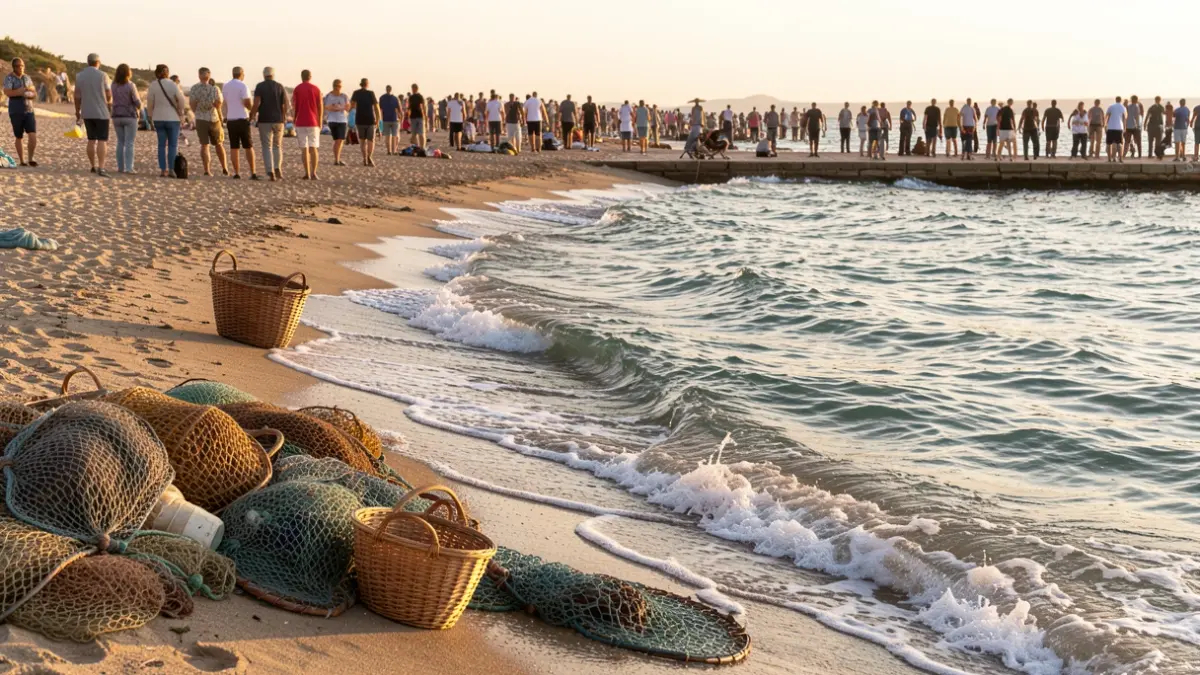
The workshop, The Mediterranean Blue Economy Workshop: Rethinking Seafood Valorization, brought together over fifty participants from more than ten countries, including representatives from fisheries administrations, research, fishing guilds, cooperatives, businesses, and regional organizations such as the General Fisheries Commission for the Mediterranean (GFCM) and the Union for the Mediterranean (UfM). The event, organized by the Spanish Agency for International Development Cooperation (AECID) through the Masar al’an program, emphasized the need to maximize value per kilogram rather than increasing the quantity of fish caught.
The mayor of Roses, Sílvia Ripoll, highlighted the sea's importance to the city as a source of employment, economy, tradition, and future. It was noted that despite improvements in fish stock overexploitation, one in every four fish caught still does not reach the market. Experiences from Iceland, the Alicia Foundation, and the UfM illustrated comprehensive utilization strategies and the significance of cuisine and education in creating demand.
Working groups concluded that a significant portion of loss occurs on land, post-landing, due to deficiencies in the value chain such as lack of ice, refrigeration, labeling, or traceability. They proposed reviving traditional techniques like drying and salting, and enhancing commercialization. Regarding consumption, cultural barriers such as lack of knowledge and fear of bones were identified, leading to proposals for combining culinary arts, early childhood education, and the promotion of lesser-known species.
Cooperation among Mediterranean countries was a key theme, emphasizing bidirectional learning between the north and south. Concrete commitments were made, including the creation of a seafood product group by a Lebanese agri-food cluster and an Egyptian chef's intention to replicate the Roses model, which integrates the fish market, processing plant, and gastronomy. The conclusions will be compiled in a final document, and the conversation will continue under the hashtag #RethinkingSeafood.