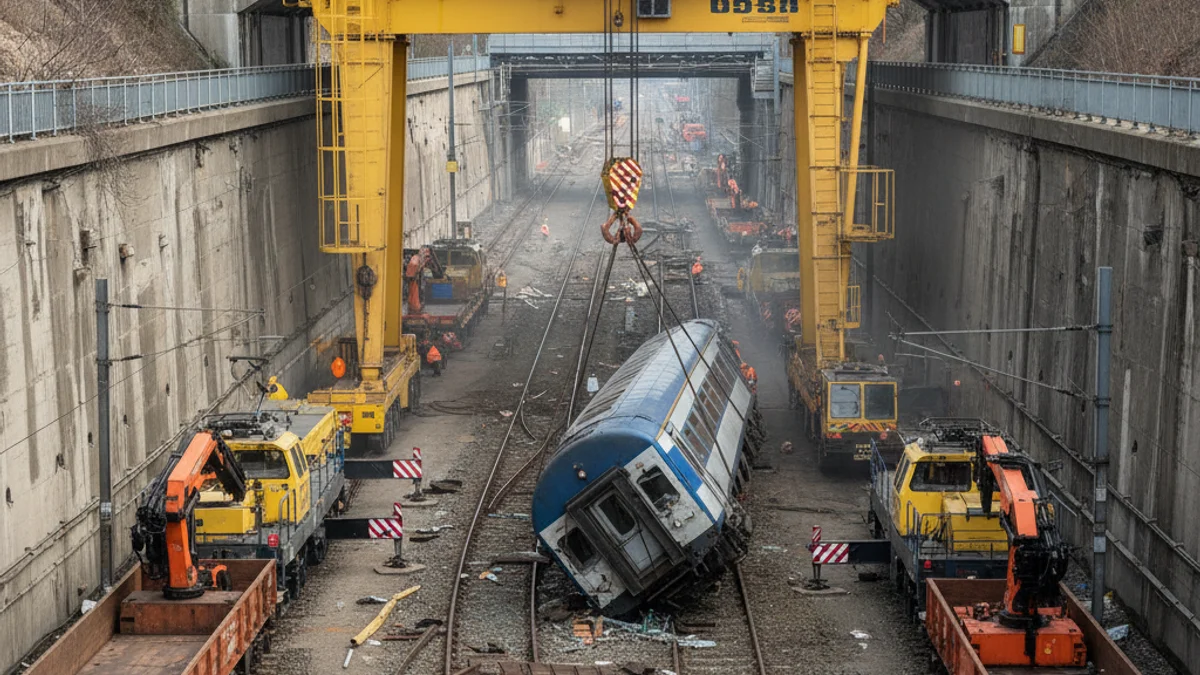
The Rodalies (commuter rail) operator has launched the operation to remove the train that crashed into an AP-7 retaining wall that fell onto the track on Tuesday night. The state company's plan is to separate and scrap the first carriage, the most damaged by the impact, directly at the crash site. The rest of the convoy will be towed by rail to Renfe's workshops for "corresponding revisions," according to company spokesperson Antonio Carmona.
According to the ACN agency, the first two carriages have already been separated, and a second train has begun towing the rest of the damaged vehicle from the rear. The intervention is considered "complex" by the technical teams, as the location presents major difficulties for the use of heavy machinery, such as a large crane.
The fragility of the AP-7 motorway, which remains closed to traffic due to the risk of collapse and runs above the track in Gelida (Alt Penedès), prevents the crane from being positioned on that side. On the other side is the Can Martí estate, owned by the Torelló cellars and dating back to 1325, where placing the crane could damage the centuries-old wine cellars.
“"A solution will be found to carry out the task."
Parallel to the removal, a railway crane has been working since early morning on the track adjacent to the R4 convoy. Technical teams have also performed additional checks and closed the train doors for the first time since the accident occurred.