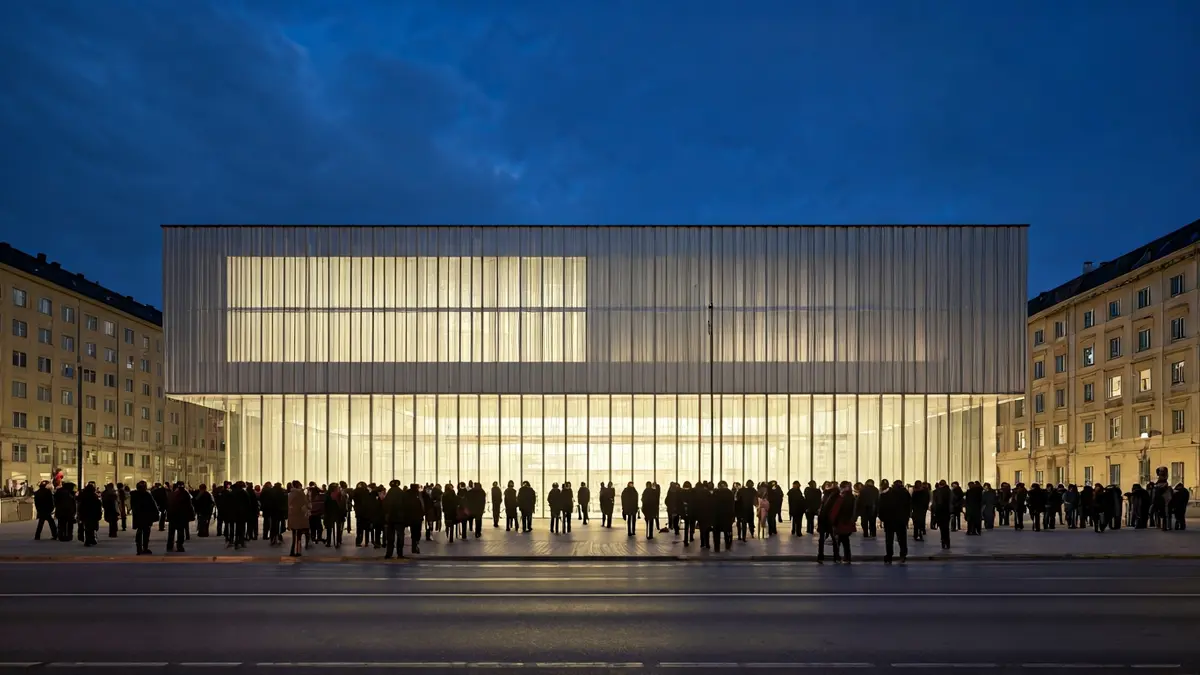
The new penitentiary center in Barcelona, located in Zona Franca, represents a paradigm shift in the open-regime system. With an investment of 35.6 million euros, the facility, which more closely resembles an institute or a primary care center than a traditional prison, is prepared to receive up to 800 inmates from the province of Barcelona who are in third degree or semi-liberty.
The facilities, which will become operational in the fourth quarter of this year, break away from conventional carceral aesthetics. They are built with sustainable and low-maintenance materials, such as glazed ceramic, and incorporate a state-of-the-art security system. Instead of bars and keys, electronic cards and a biometric facial recognition system are used at access turnstiles.
“"The open-regime model is key for reintegration, because it allows a progressive transition towards freedom and a real connection with the social and work environment. Data indicates that people who gain freedom from this model have significantly lower recidivism rates."
This opening will allow the definitive closure of the old Trinitat prison facilities, where the Barcelona City Council is already building subsidized housing. Inmates currently undergoing monitoring or sleeping there will be transferred to the new Zona Franca center, which will also house men from the women's prison section of Wad-Ras, which will also be relocated in the future.
The center, with a usable area of 13,000 square meters, will increase semi-liberty places from 600 to 800, centralizing administrative management and treatment tasks for the entire province. The rooms, which are not called cells, are painted white to promote luminosity and serenity, and access is via electronic card. Architect Montse Llorens, executive coordinator of the investment plan, highlights the use of a differentiated color code per floor to humanize spaces and facilitate orientation.