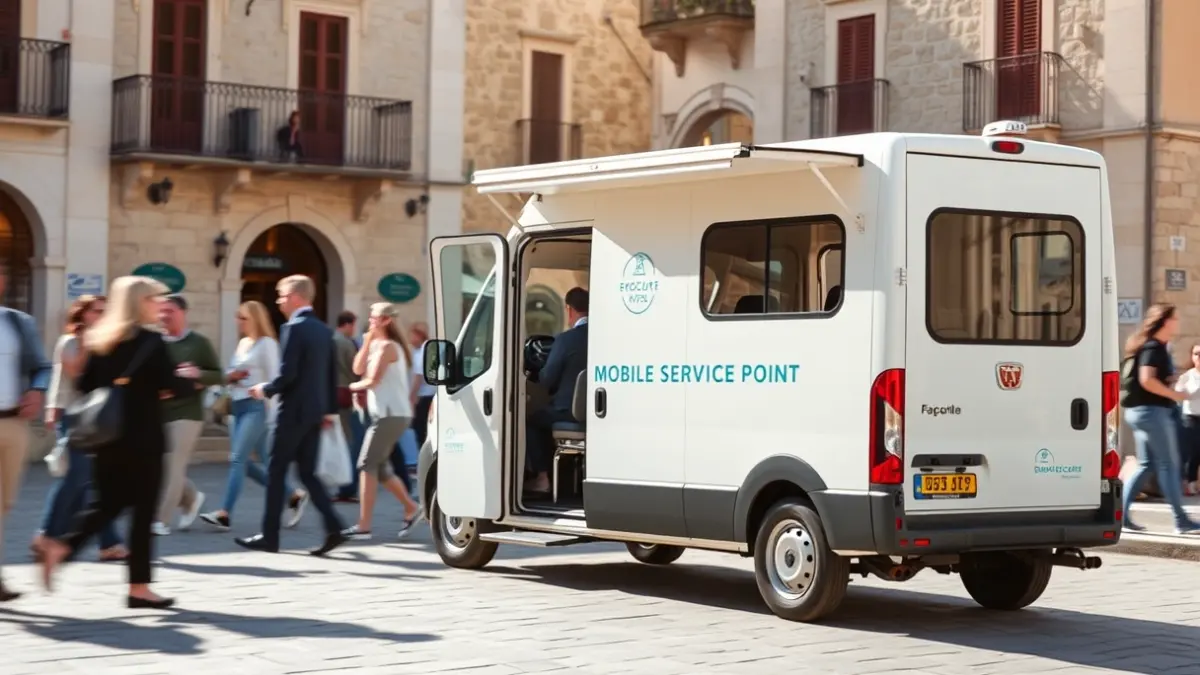
Starting Monday, five vehicles will begin routes across all regions, visiting each locality at least once every five weeks. During the visits, lasting between 1.5 and 3 hours, a digital agent will assist citizens with online procedures, such as certificate renewals, aid applications, or various inquiries. This service, with a budget of 2.43 million euros for this and next year, has been rolled out after a successful pilot program in the Terres de l'Ebre.
“"We want to bring the administration to the square of every town in the country to make life easier for citizens everywhere."
During the presentation of the service to mayors in Mediona (Alt Penedès), the minister highlighted that the mobile OACs will also help reduce the digital divide, empowering citizens to carry out procedures autonomously in the future. For example, the idCat mobile identification system will be activated for all users who do not yet have it. This initiative champions in-person attention in a context of increasing digitalization, ensuring that citizens are served with dignity and kindness.
The nearly 200 municipalities selected for this service are characterized by their distance from Generalitat offices, low population density, geographical dispersion, or public transport limitations. Selection criteria include a predominantly over 50-year-old population, a distance exceeding 13 kilometers from the nearest Comarcal Council or more than 30 kilometers from the nearest OAC, and a travel time exceeding 1.20 hours to the nearest OAC.
Among the localities that will receive visits are municipalities of various sizes, from Calella (Maresme) or Palamós (Baix Empordà) to smaller ones like Mont-ral (Alt Camp) or Bot (Terra Alta). The itinerant offices, equipped with a climate-controlled desk and a laptop station, will ensure a stable connection thanks to a connection aggregation system, even in areas with coverage issues. The vehicles are accessible for people with reduced mobility.
“"Now, fortunately, the difficulties of smaller towns are being taken into account, as it often seems we don't exist."
The pilot program in the Terres de l'Ebre, launched in mid-2024, has handled over 2,000 procedures with an average rating of 4.89 out of 5. The most frequent procedures have been related to digital certificates, applications for activities with forest fire risk, inquiries about benefits, and subsidies for renewable energy systems. Users over 65 years old have been the main beneficiaries.
This deployment is part of a new citizen service model that includes the creation of eleven integrated OACs across all vegueries before the end of the legislature, with locations such as Lleida, Tarragona, Girona, and Barcelona. Additionally, new digital channels have been implemented, such as the Virtual Office with video assistance and the revamped gencat.cat portal.