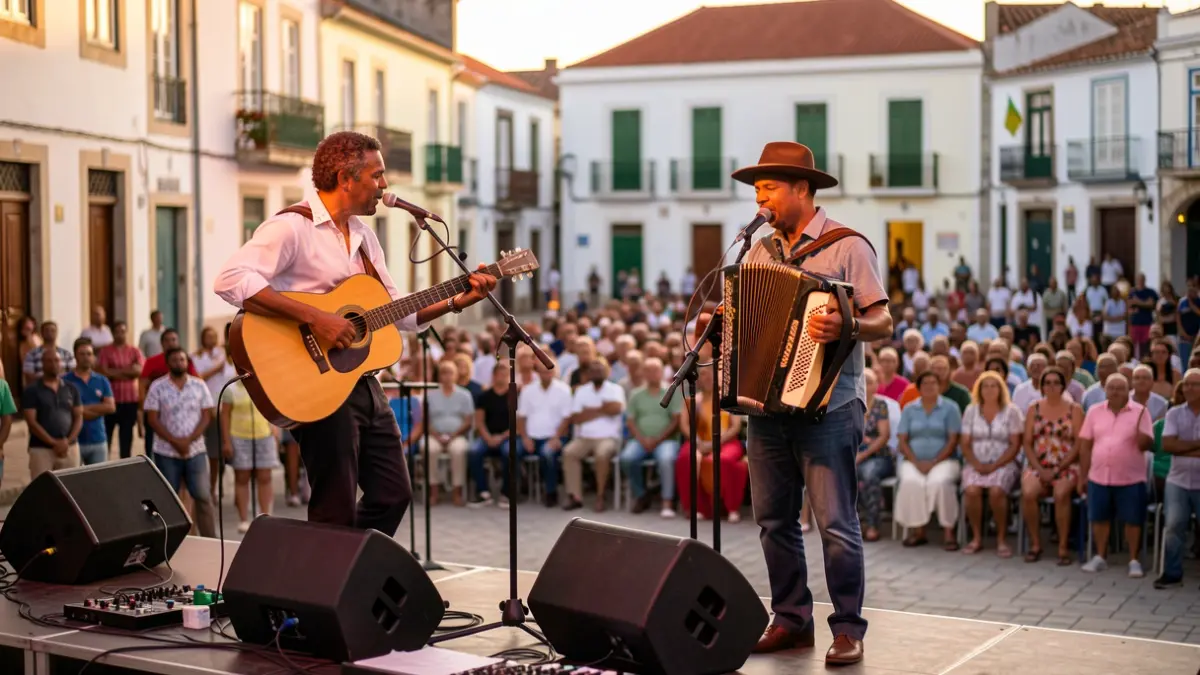
The Escola Folk del Pirineu has organized for this weekend a workshop and concert focused on the music of Cape Verde, featuring the renowned author and composer Tote Zabelinha. This event is part of Zabelinha's visit to Alt Urgell, aiming to promote the rich musical tradition of his country.
The concert, scheduled for Friday evening (7 PM) at the Parc d'Arsèguel, will be free and open to the public. Zabelinha will perform accompanied by Catalan musician Marc Figuerola. The following day, Saturday, the composer will lead a 'masterclass' specifically designed for students participating in the Colònies Folk (Folk Colonies) held this year in the municipality of Baridà.
“"Morna is, without a doubt, the most internationally known of Cape Verde's indigenous genres, largely thanks to the great projection achieved by Cesária Évora, its most famous interpreter."
Morna is the most internationally recognized genre from Cape Verde, popularized by artists such as Cesária Évora. This genre, considered the most distinctive of the island's music, blends influences from Portuguese fado, Argentinian tango, and African rhythms like Angola's lundum. Although oral tradition places its origin on the island of Boa Vista in the 18th century, there are no musicological records to corroborate this.
Coladeira, another musical genre from Cape Verde, is characterized by a variable tempo, a binary meter, and a harmonic structure based on the circle of fifths. Its themes often include satire, social criticism, or cheerful narratives. It is believed that the original themes of Boa Vista's morna might have been these, and that coladeira adopted this initial thematic focus as morna evolved towards lyricism and 'saudade'.
Various forms of coladeira exist, including a fusion with zouk, a rhythmic style originating in the French Antilles (Guadeloupe and Martinique), with roots in Haitian kompa. The word 'zouk' is commonly translated as 'party' or 'festival'.