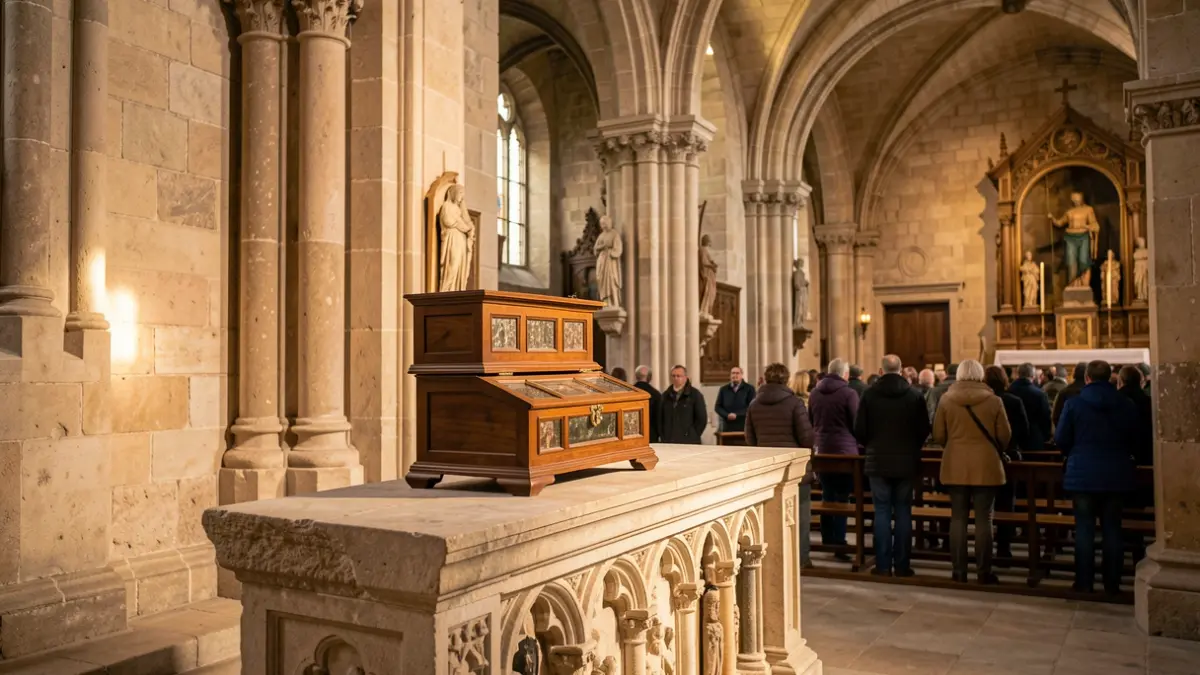
The village of Viu de Llevata has recovered a replica of a lipsanoteca, a small wooden box used during the consecration of Romanesque temples. This piece, found accidentally during maintenance work in 1972, contains a notarial and liturgical parchment providing key data about the church's history.
According to Montse Macià, diocesan delegate for Artistic and Cultural Heritage, the document specifies the temple's consecration date, the ownership of the relics belonging to Sant Albí, the church's dedication to Santa Maria, and the identity of the consecrator: Bishop Ramon Guillem.
This consecration, predating that of the churches of Taüll (1123), confirms Santa Maria de Viu de Llevata as the first major Romanesque temple in Ribagorça. Like other churches in the Vall de Boí, its construction is attributed to the activity of the lords of Erill.
The exact replica of the lipsanoteca, made by a specialized company at the request of the Museu de Lleida, now returns to the temple. This initiative, 50 years after the original discovery, allows this 12th-century artifact to once again be part of the church's heritage, which was previously unknown to many.