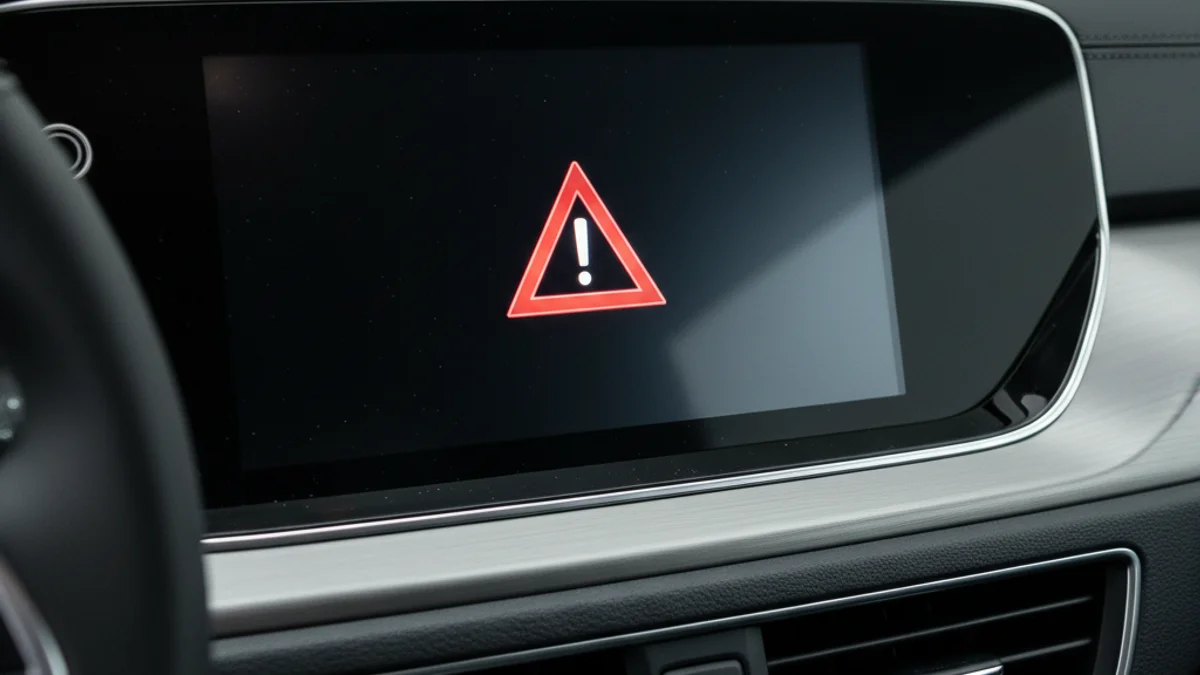
The transition towards connected safety will accelerate starting January 1, 2026, the date when emergency triangles will be definitively replaced by the V16 light. However, the Directorate General of Traffic (DGT) has designed a plan where the virtual V27 signal will act as an "invisible shield" to reduce accidents.
Differentiating both concepts is essential. While the V16 beacon is a mandatory physical device with geolocation that the driver must activate in case of breakdown or accident, the V27 signal has no physical body. It is an intelligent virtual alert projected directly onto the infotainment system or digital instrumentation of connected vehicles.
V27 technology will operate silently and intangibly, acting as an invisible shield that promises to change how we perceive dangers while driving.
The system operates by receiving data via the DGT 3.0 platform. When a V16 is activated, it automatically sends the incident coordinates to the DGT cloud, which immediately forwards the V27 warning to approaching vehicles. This anticipation is key to preventing run-overs and secondary collisions, solving visibility issues on curves or in intense sunlight.
There is a substantial legal difference: the V16 will be fully mandatory for all vehicles. In contrast, the incorporation of the V27 functionality is voluntary. Its availability depends exclusively on the technological equipment of the automobile and whether it has an active connection to the DGT's telematics services.