On October 29, 2026, Civil Protection of the Generalitat, Pompièrs d'Aran, and the Ministry of Transport and Sustainable Mobility organized an accident simulation inside the Vielha Joan Carles I tunnel (N-230). The exercise tested the infrastructure's Self-Protection Plan (PAU), approved on September 4, 2025, to verify the application of procedures for an accident involving a vehicle fire and affected individuals.
The simulation allowed for the evaluation of emergency management, which since 2023 falls under the Corps of Pompièrs d'Aran, from the tunnel's control center and the response of exploitation and first intervention teams. The functionality of the infrastructure's prevention and safety elements was also checked. The main objective was to verify the deployment of the different agencies involved in such a incident, according to the PROCICAT Plan's deployment structure. Emergency management was conducted with the highest command of Pompièrs d'Aran, activating up to level 4 responsibility.
The scenario simulated a vehicle accident inside the tunnel, followed by a fire and reduced visibility due to smoke. The two occupants of the vehicle were affected and the exercise assumed they could reach a shelter or evacuation gallery on their own. At the time of the simulated accident, the vehicle was the only one inside the tunnel. Upon receiving the alert, the north and south access points were closed to facilitate the intervention of emergency services.
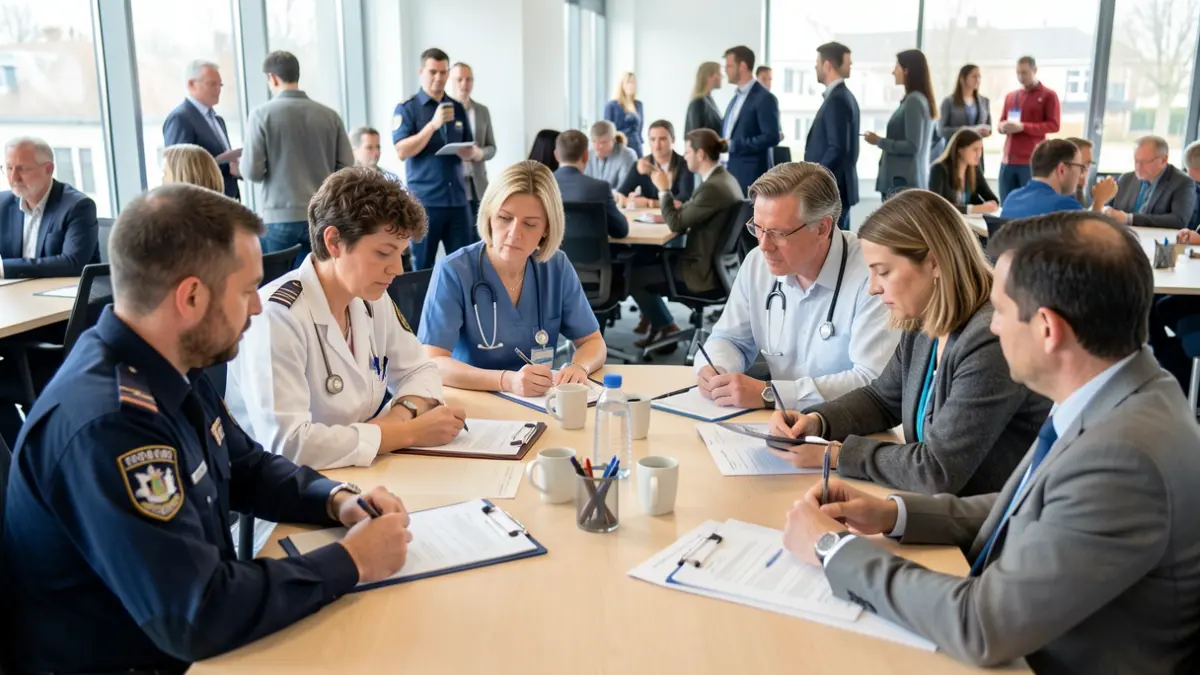
The Corps of Pompièrs mobilized 6 units, 14 firefighters, and 15 observers, with support from Bombers de la Generalitat requested by the Aran Control Room (SCAran). The latter participated with a unit from the Pont de Suert station. SABS, through Aran Salut, coordinated the medical group with a USVA unit. The Mossos d’Esquadra participated with three patrols for the order group, one integrated into the Coordination Center and the other two controlling access points. The Corps of Environmental Agents and the Rural Agents Corps also collaborated.
The Medical Emergency System (SEM) collaborated in the medical assistance, deploying three units (1 Advanced Life Support, 1 command, and 1 Sanitary Logistic Support) with 7 professionals, coordinated from the SEM's Health Coordination Center.