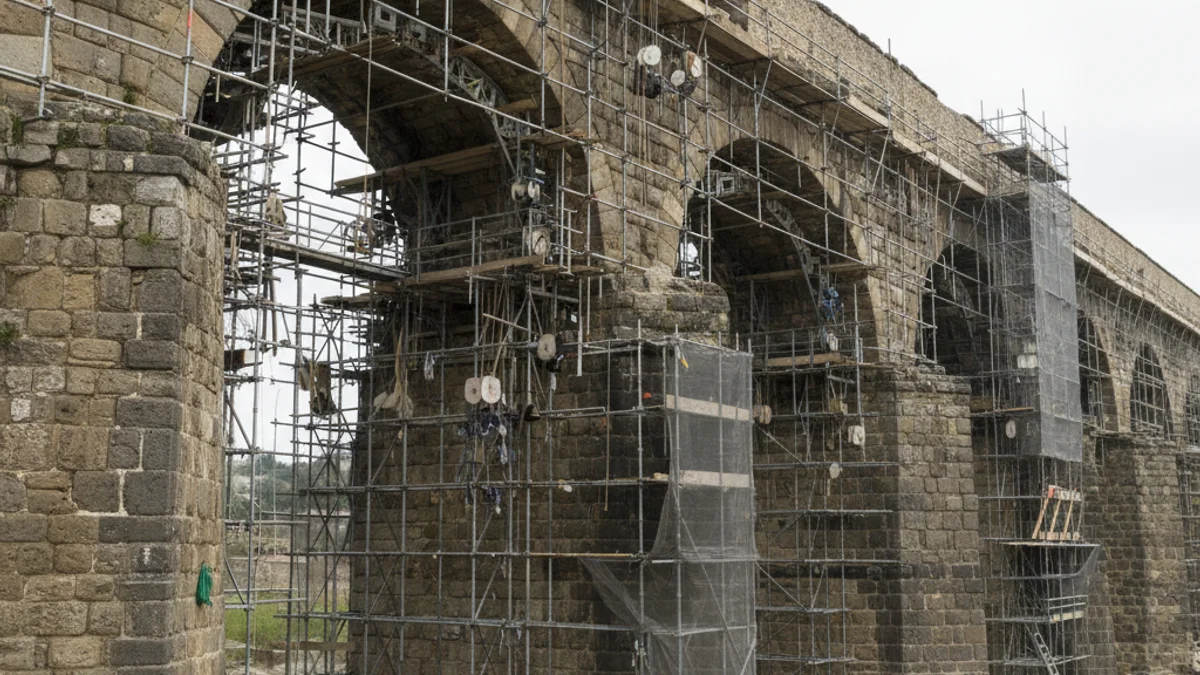
Workers have carried out the initial tasks of cleaning the upper channel and controlled removal of vegetation embedded in the walls, including specific treatment for deep roots. This intervention, covering an approximate length of 75 meters, aims to consolidate the most vulnerable sections and prevent water accumulation.
The structure, declared a Local Cultural Asset (BCIL), dates back to the early 16th century and consists of fourteen stone arches. Originally, the aqueduct carried water from the Font Gran to the old oil mills of the Prioral palace and Cal Gibert.
The deterioration was primarily caused by the action of roots, which have disintegrated the materials, and stagnant water, which has led to erosion and the displacement of coping elements. This situation posed a real danger to pedestrians and users of the surrounding public space, such as the Passeig de la Canaleta.
This urgent action has a budget of 19,077.24 euros (VAT included) and an estimated execution period of three months. The total funding is provided by the Diputació de Barcelona, allowing the council to act quickly to protect the heritage without impacting municipal finances, pending a larger rehabilitation project.