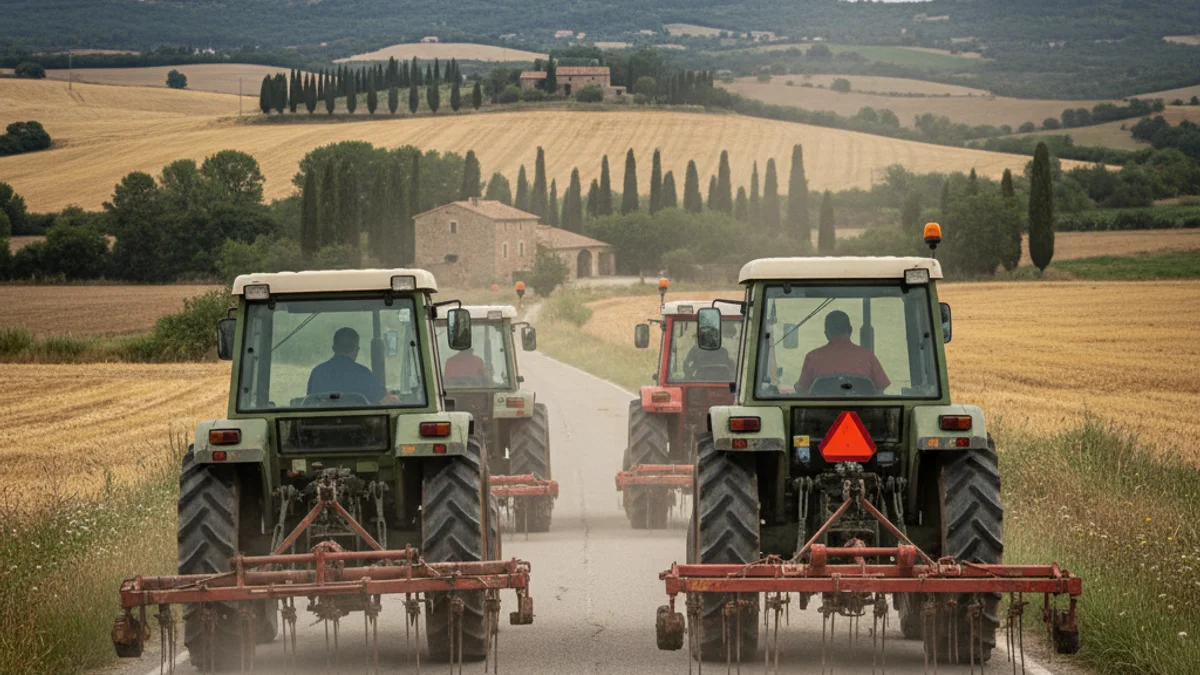
Joan Rius, spokesperson for Revolta Pagesa and a farmer from Castellfollit del Boix, noted that this year's mobilization, although smaller with only about fifteen vehicles, celebrated the second anniversary of the first major protest that paralyzed the country. He admitted that there have been some improvements, but that “things have not changed much” in the general situation of the sector.
“"We are not politicians. We are farmers; we don't know much about the art of words and deception, but we have to keep holding on and keep achieving things..."
Veteran farmer Enric Casasayas, from Manresa, expressed his pessimism about the implementation of agreements, criticizing politicians for often saying one thing in private and another in public. Nevertheless, he argued that the initial protest “was worth it” for raising public awareness about the agricultural crisis.
“"People don't realize that, in a few years, with agreements like Mercosur, we will eat what they want, when they want, and at the price they want."
Pep Escaler, a farmer from Bages, agreed with the feeling of “tiredness” and being “taken for a ride,” but highlighted that the struggle has led to progress, such as more forceful actions against game fauna. The march to Barcelona, permitted until Saturday, does not rule out joining other social protests, such as those concerning Rodalies (commuter rail), to exert “pressure on behalf of the entire society.”