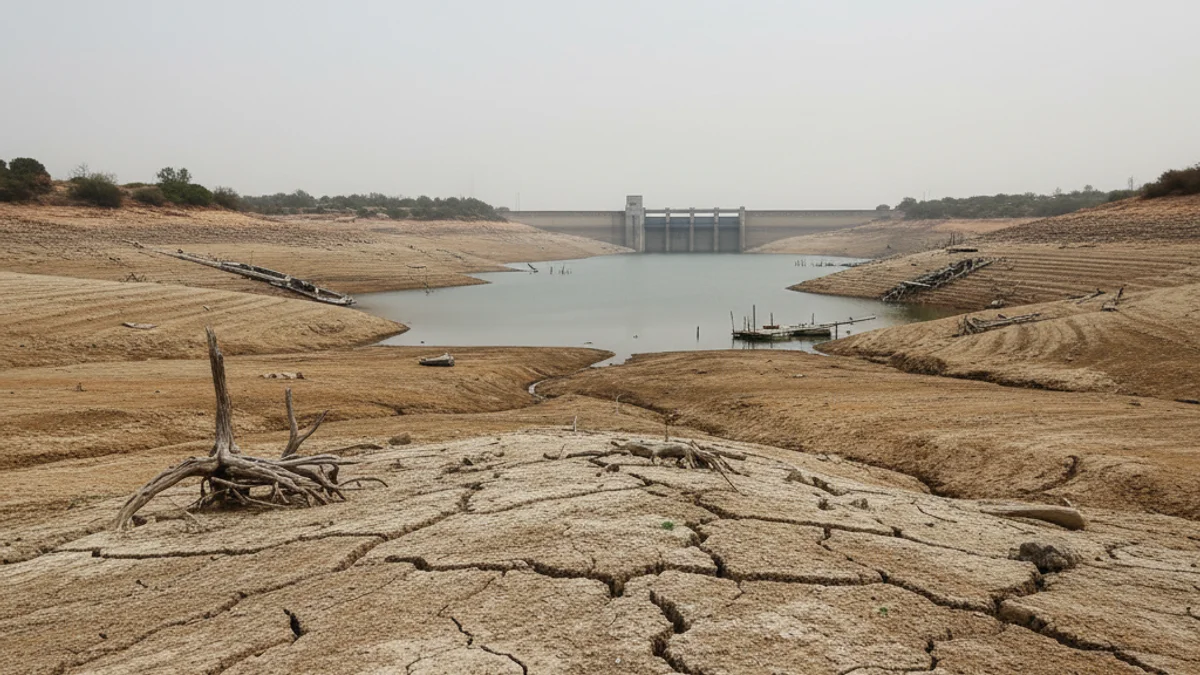
The request was made public during the Regulating Community's appearance to review the 2025 campaign, which was defined as “especially complex” due to the drought in 2023 and 2024. Currently, the Riudecanyes Reservoir holds reserves close to 5 hectometers, but needs 2 more to guarantee irrigation similar to last year.
Given the critical situation, with the Siurana Reservoir at 18% capacity, Prats opened the door to bringing water from the Ebro, “punctually” and if there is “surplus,” to ensure the Priorat reservoir reaches 80%. The administrator emphasized that this would not be a “diversion” because both rivers are within the same hydrographic basin, although part of the water would end up in the Riudecanyes Reservoir, which belongs to the internal basins managed by the ACA.
“"Climate change affects us all; the future of dry farming is increasingly unviable if there are no shared solutions."
Regarding the historical conflict with the Priorat region over the water concession, Prats offered “dialogue” and invited stakeholders like the Regional Council to join the regulating community, as the current concession does not end until 2061. He insisted that cooperation, not “conflict,” is the best path forward.
Finally, Prats warned about delays in the regenerated water plant at the Reus wastewater treatment facility, which will not be completed until 2029, two years later than initially planned. Furthermore, he insisted that this water might not be suitable for irrigating hazelnut trees due to high salinity, with an estimated cost of 40 million euros. The community noted that the Segarra-Garrigues canal option would be “much cheaper,” costing around 20 million euros.