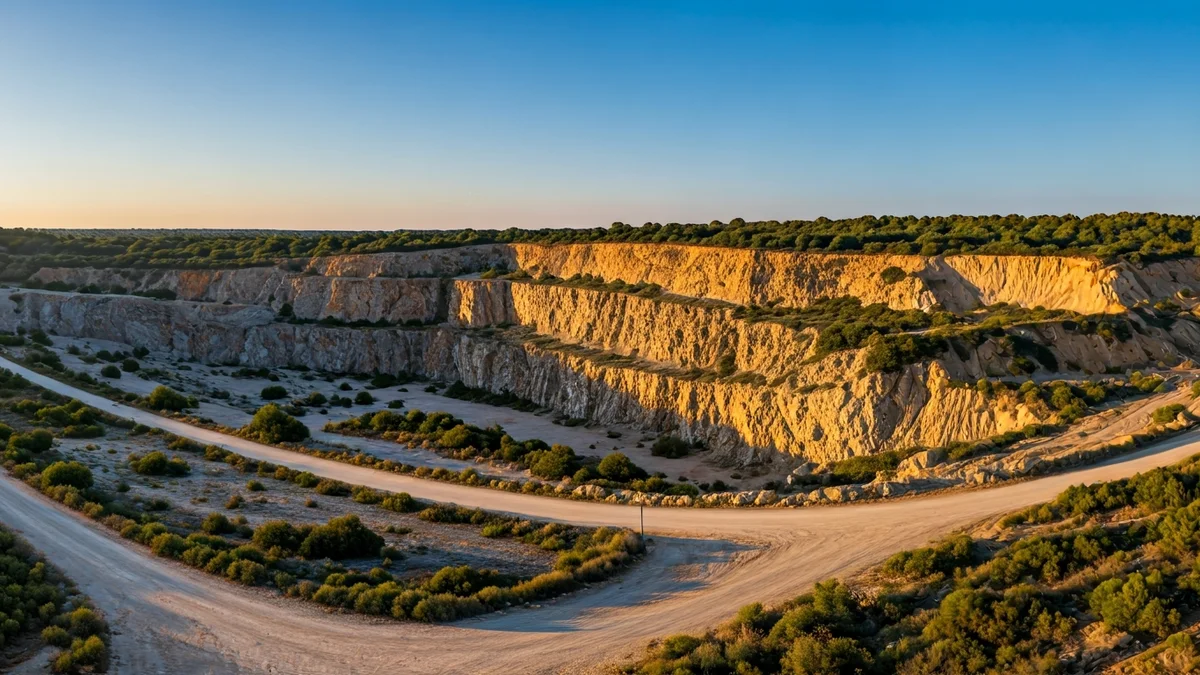
This area, which for years served as a quarry and later a truck parking lot, is currently disused. Its recovery is a crucial step for the city, as it will transform a degraded zone into a green lung open to the public, as stated by the Castelldefels City Council.
The uniqueness of Ca n'Aimeric also lies in its paleontological value. At this site, known as the 'rhinoceros cave', a study by the University of Barcelona (UB) confirmed the presence of prehistoric rhinoceroses approximately 130,000 years ago. Excavations also revealed fossils of Mediterranean turtles, elephants, deer, and bovids.
“"The approval represents a decisive step to transform this area into a new metropolitan park open to citizens."
The project, drafted by Batlle i Roig (BIR) and Simon i Blanco (SBS), aims to generate new social and cultural dynamics, improve quality of life, promote the natural water cycle, and enhance biodiversity. The Environment Councilor, Pedro Paredes, explained that the park seeks a 'balance between nature recovery and areas with greater human activity'.
Planned facilities include green areas with native vegetation, an interpretive center for the 'rhinoceros cave', sports areas, an outdoor amphitheater, children's play areas, a dog park, and walking paths. The site will feature a night-time closing system to ensure safety and maintenance.
The history of Ca n'Aimeric is complex. After being a quarry since 1945, it hosted a military camp in 1955. In 2001, a water park project was proposed but rejected by residents, and in 2006, an agreement was signed for a truck parking lot. Even in 2020, a funeral home was considered, also facing local opposition. Finally, in 2024, the agreement with the truckers was rescinded, paving the way for the current park project.