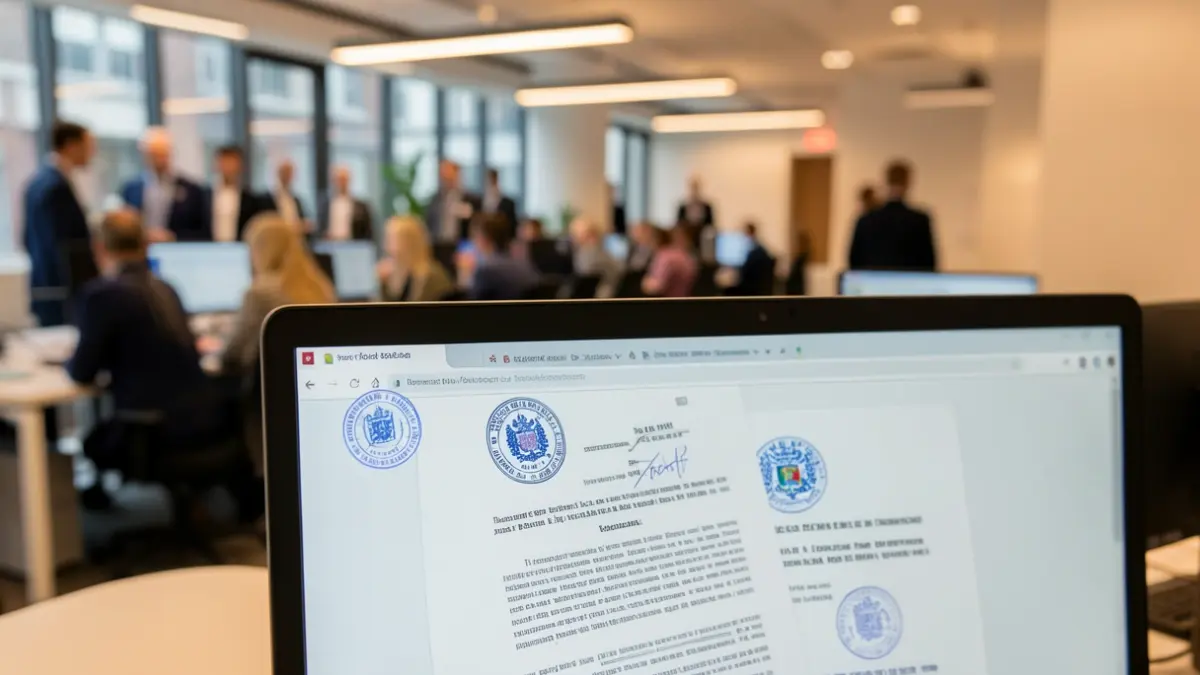
The session presented the strategy of the Generalitat de Catalunya in deploying BIM within local administration, with a specific focus on the Sant Feliu City Council. This technology aims to streamline procedures and licenses, optimize resources, improve inter-administrative collaboration, and advance towards more efficient, data-driven territorial management.
The event follows the signing of the COBIMCat agreement in November 2025, an accord between the Generalitat, the Barcelona Provincial Council, the Metropolitan Area of Barcelona, and the Barcelona City Council. This pact promoted the BIM methodology in construction and drove digital transformation in civil works, housing, and infrastructure.
The BIM methodology will enable the five signatory public administrations to work uniformly on civil works through a 3D digital representation. This will facilitate project tracking throughout their lifecycle, from planning to construction, based on geometry and structured data.
Furthermore, BIM will establish a coordination space among administrations, promote the system's use in asset construction and management, expedite permit acquisition, and define common standards. This will enhance efficiency and encourage the use of open sources for data interoperability and traceability.
“"With the urban transformation of the city and industrial estates, without data technology it would be impossible to make predictions"
Lourdes Borrell, mayor of Sant Feliu, highlighted the importance of developing methodologies like BIM in the city's urban transformation context, stating that "administration is an important part of serving people and change was necessary." She emphasized that "technological structures like BIM can be found, allowing data to be inserted into facilities for knowledge acquisition."
“"moving from documents to data to be able to better analyze, automate tasks, transform, and simplify procedures"
Albert Tort, Secretary of Telecommunications and Digital Transformation for the Generalitat de Catalunya, stressed the need "to move from documents to data" to improve analysis, automate tasks, and simplify procedures, thereby promoting "a data-driven administration."