The armed institute has requested public collaboration to identify the possible perpetrator of the violent death of a 38-year-old woman, whose remains were located on August 6, 2005, in Sant Pere Sacama, within the municipality of Olesa de Montserrat.
To advance the investigation, several visual pieces of evidence have been released. These include a photograph of the victim while alive and images recorded by a surveillance camera at an ATM on Sant Roc Street in Terrassa, showing a man withdrawing money using the deceased's bank card on April 9, 2005.
The investigation began in 2005 with the discovery of human remains in plastic bags. Forensic reports determined that the woman showed clear signs of violent death, including a fracture to the left cheekbone compatible with a blow from a blunt object, and an orifice in the right shoulder blade, possibly caused by a projectile.
The victim's identification was later achieved through the Fénix program for the genetic identification of missing persons, promoted by the University of Granada. It was determined that she was a resident of Riudoms, whose disappearance had been reported at the National Police Station in Reus on April 9, 2005.
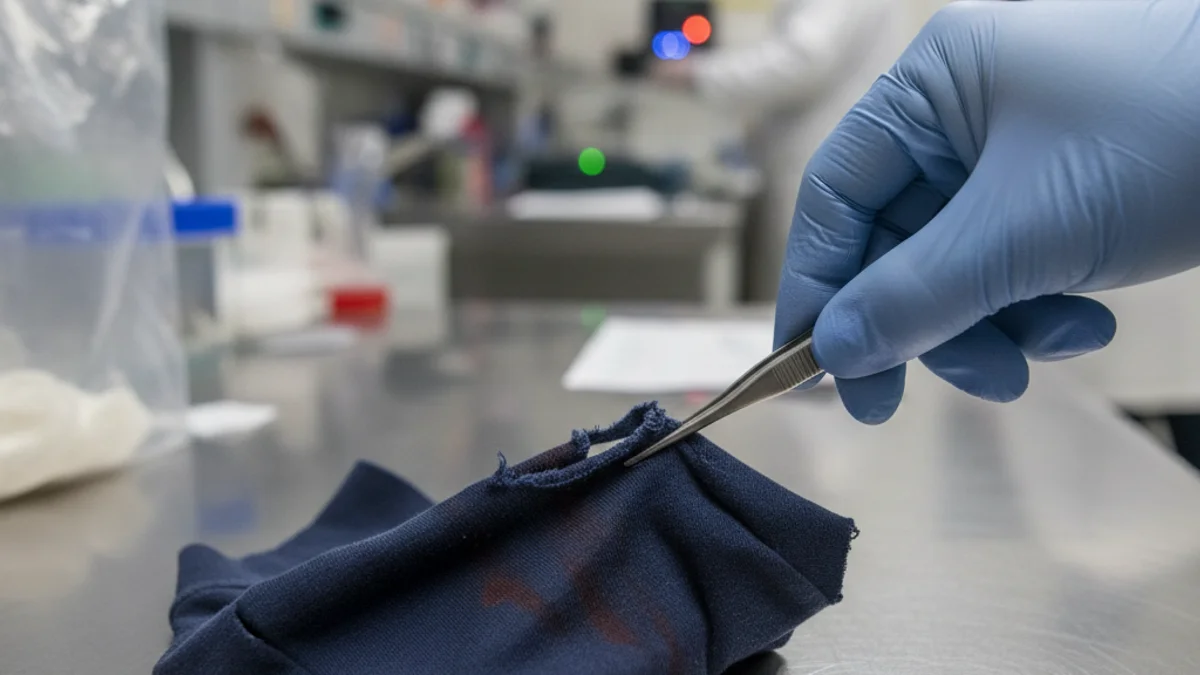
In addition to the images, the Civil Guard has shared a photograph of a T-shirt fragment recovered during the investigation that does not belong to the victim. The garment bears the English inscription 'Fun and Friends Alternative Energy Pub League' and is considered key evidence potentially related to the perpetrator or their associates.