The Railway Accident Investigation Commission (CIAF) published a six-page document this Friday regarding the train accident in Adamuz (Córdoba). The main hypothesis is that the left rail of the high-speed track was broken before the Iryo convoy passed, which subsequently overturned and collided with an Alvia train.
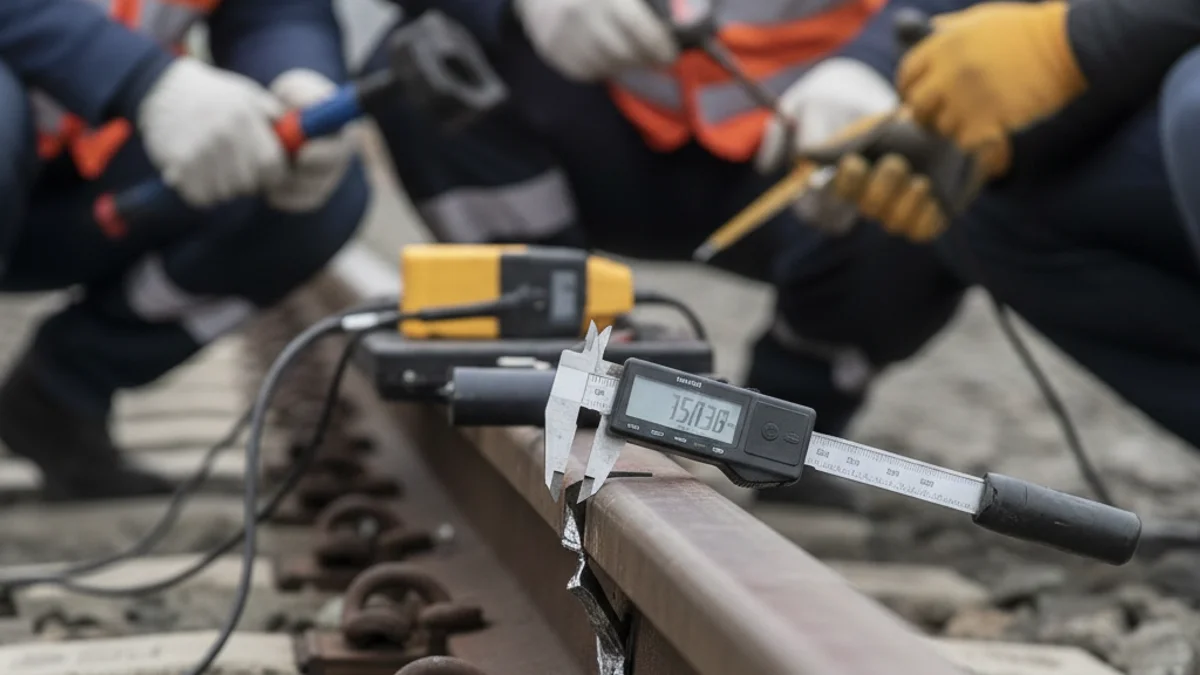
According to the document, the marks detected on the wheels of the carriages and the deformation of the rail are compatible with a prior fracture. This crack would have caused a slight sinking of the track under the weight of the wheels, explaining the marks found on cars 2, 3, 4, and 5 of the crashed convoy.
Car 6 derailed due to a complete loss of continuity of the running surface.
This hypothesis is reinforced by the fact that similar marks were found on three other trains that had previously circulated through the same spot: one from Renfe and two from Iryo between 5:21 PM and 7:09 PM. The CIAF highlights that the marks show a uniform pattern on cars 2, 3, and 4, coinciding with the section of the broken rail.
However, the commission stresses that this is a provisional conclusion that must be confirmed through detailed metallographic analyses of the rail and wheels in a laboratory. The black boxes of the two trains involved will also be analyzed to open new lines of investigation.