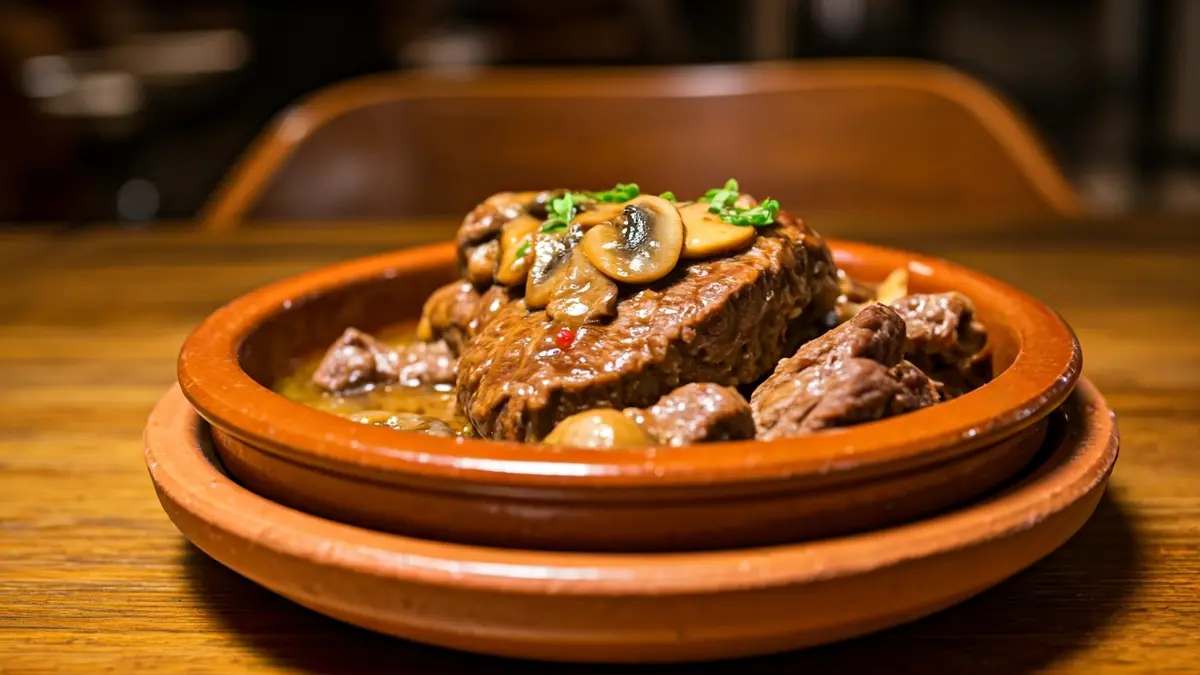
This trend is evident in various city establishments, where the authentic taste of “grandma’s slow-cooked meals” is once again taking center stage. Places like Casa Pagès, l’Andreuenc, Bar Dijous, Granja Elena, and Bar Casi are renowned for their fork breakfasts, offering dishes with sauces that invite diners to soak up every drop with bread. The restaurant Can Ugal, in les Corts, also stands out for its fricandó.
The revival of historic bodegas such as Manolo and Gol, alongside classic restaurants like Ca l’Estevet and Carles Gaig’s establishments (el Petit Comitè and Gaig), confirms this revitalization. Even new venues, like Bar Veracruz, are incorporating fricandó into their menus, adhering to traditional recipes.
Tradition is also open to reinterpretation, as demonstrated by the tuna fricandó with mushrooms prepared by Jordi Vilà at Alkostat. Furthermore, fricandó is adapting to new formats, such as the sandwiches offered by charcuteries Pamb and Bodega Montferry, solidifying its presence in Barcelona’s gastronomy.
Beyond dining tables, fricandó has gained popularity on social media, with viral recipes from young people teaching how to prepare Catalan dishes on Taula per dos (@taulaperdos_). This cultural effervescence culminates with the publication of Fricandónation, a book by Miquel Bonet, which the author describes as a “rogue gastronomic thriller” and a passionate defense of Catalan cuisine.
“"We play with the hypothesis that the prophecy of the disappearance of traditional cuisine has been fulfilled. The story transports us to a very near dystopia where no trace of the usual dishes remains, or rather, almost no trace, and meatballs with cuttlefish, samfaina, or capipota have disappeared from menus and lists."
Bonet conceived Fricandónation three years ago, at a time when traditional cuisine did not seem to have a promising future. Despite the current recovery, the author expresses concern that this trend might only be a “swan song or a mirage,” hoping that Catalan cuisine “has returned to stay.” In his dystopia, a “gastronomic pope” is the one who brings Catalan cuisine back into fashion, starting with an escudella and a fricandó that amaze a French critic, triggering a craze to turn fricandó into the “new ramen.”
“"For young people, fricandó will be something exotic."
Bonet laments that for new generations, dishes like fricandó or samfaina sound exotic, unlike the culinarily Catalan Barcelona of the past. He believes that the current activism for Catalan cuisine signals that things are not going well, but also shows resistance, similar to the situation of the Catalan language. He recommends Jordi Vilà’s restaurant Alkostat in Barcelona for its “recipe book and militancy.”