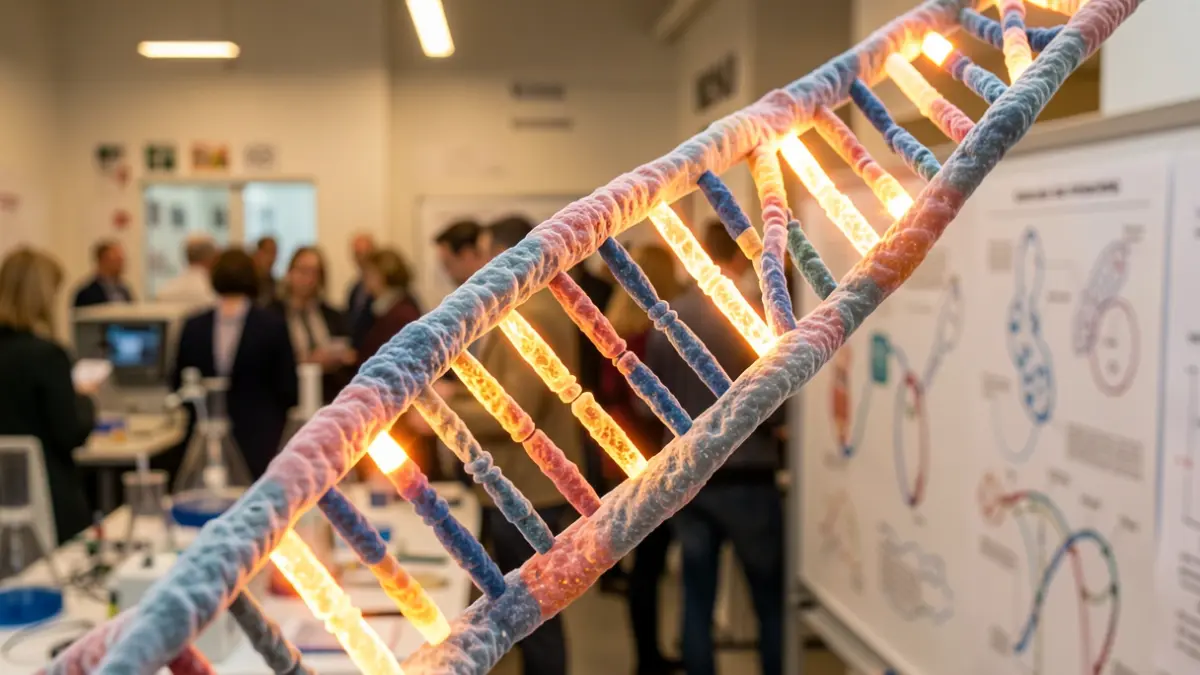
In Ewing sarcoma, an abnormal protein formed by the fusion of two genes can activate repetitive DNA regions, turning them into gene regulatory elements. This process is a key molecular characteristic and significantly contributes to tumor development.
Led by Dr. Cayetano González, ICREA Research Professor (emeritus) at IRB Barcelona, and in collaboration with Dr. Jaume Mora, a researcher at the Pediatric Cancer Center Barcelona of the Sant Joan de Déu Hospital, the study has described how this activation can occur even without fused proteins. The research, conducted in the fruit fly Drosophila melanogaster, identifies the collaboration between two proteins as a fundamental requirement for activating these DNA regions.
Previous studies had already observed that ETS family proteins could activate these sequences (GGAA microsatellites) in prostate cancer and B-cell acute lymphoblastic leukemia, but the mechanism without fusion proteins was unclear.
The team introduced various human cancer-related ETS proteins into Drosophila. One of them, ETV4, previously implicated in prostate cancer, robustly activated GGAA microsatellites in certain fly tissues. "That this mechanism also works in the fly indicates it has been conserved over an enormous evolutionary distance and reinforces the possible relevance of the anomalous activation of these DNA regions in tumors beyond Ewing sarcoma," explains Dr. Cayetano González.
The use of Drosophila allowed overcoming an experimental difficulty: while humans have three similar FET family proteins (FUS, EWSR1, TAF15) that compensate for each other, the fly has only one equivalent protein, Cabeza (Caz). By reducing Caz levels, activation by ETV4 drastically decreased, and the introduction of the human EWSR1 protein restored activity.
"That a protein capable of activating these silent DNA regions in human tumor cells can also do so in fly cells reinforces the value of Drosophila as a model to investigate how these regions are activated and which other proteins participate in this process," notes Dr. Cristina Molnar, a postdoctoral researcher at IRB Barcelona and the study's first author.
The results help explain a key difference compared to Ewing sarcoma: while in this tumor FET and ETS components are joined in a single fusion protein, ETV4 needs to collaborate with an independent FET protein. The Ewing sarcoma fusion protein can do so without relying on Caz.
The team also found that ETV6, a protein that inhibits this process in human cells, blocks ETV4 activity in the fly, confirming the conservation of key mechanism components across species. "Understanding how these DNA regions can be activated outside the classic context of Ewing sarcoma can help us better comprehend mechanisms that are also altered in other types of cancer," points out Dr. Jaume Mora.
The work was funded by the European Regional Development Fund (ERDF), the Spanish Ministry of Science and Innovation, the State Research Agency, and the Fundació Sant Joan de Déu per la Recerca.