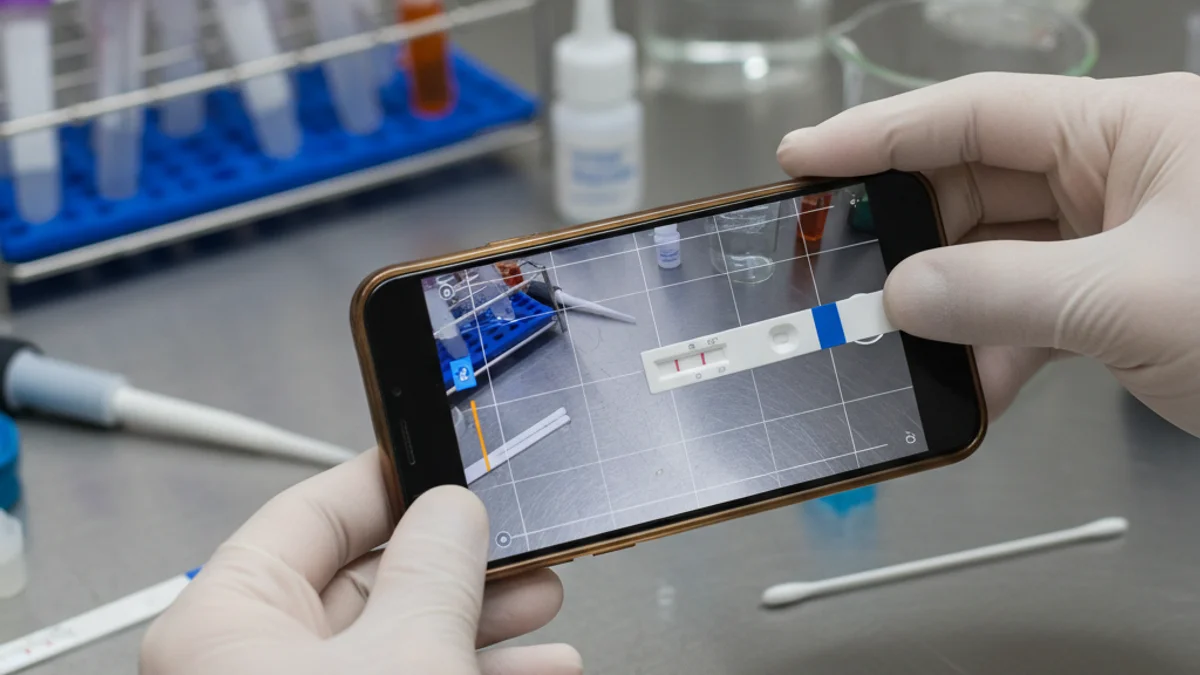
The research, published in the journal Biosensors and Bioelectronics, will allow the development of an innovative tool combining low-cost rapid tests with video analysis performed via a mobile phone, providing reliable results in less than six minutes to improve clinical decision-making.
Malaria is the parasitic disease causing the highest number of deaths worldwide. Although not endemic in Spain, imported cases are diagnosed annually in patients returning from high-infection areas, who can rapidly progress to severe forms of the disease.
The study focuses on two biomarkers produced by the parasite. The protein PfHRP2, specific to Plasmodium falciparum (the cause of the most severe form), confirms the infection, while the enzyme pan-lactate dehydrogenase (pan-pLDH) is crucial for distinguishing patients at high risk of developing severe illness.
Currently, researchers at URV and ISGlobal are validating the results with broader samples and in real clinical settings, aiming for this simple combination of rapid test and mobile phone analysis to become a standard tool for the early assessment of imported malaria.