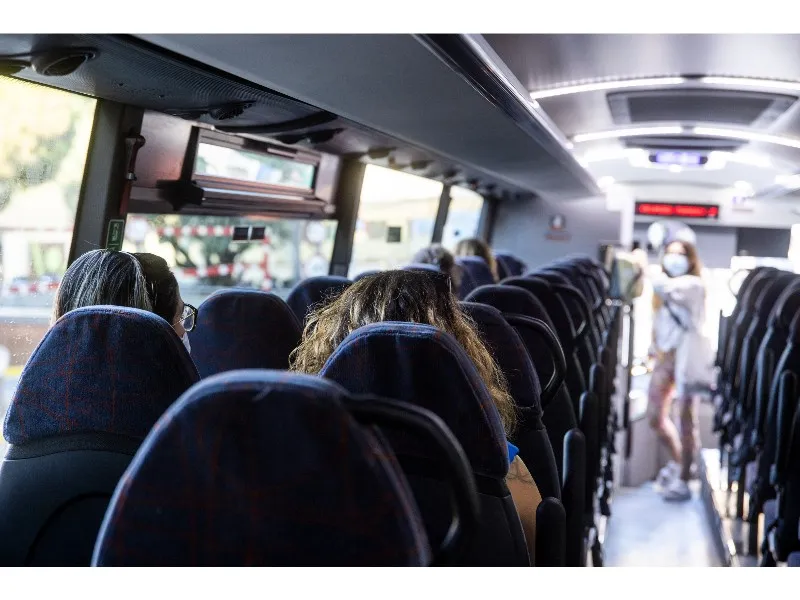
The Department of Territory, Housing, and Ecological Transition has launched an operation with 49 additional reinforcement buses for the main corridors affected by railway network incidents. The aim is to absorb the rise in demand, provide mobility alternatives for affected users, and maintain public transport service continuity.
This initiative supplements the plan prepared after last Saturday's heavy rains, which already anticipated up to 70 vehicles to cover incidents and railway line closures in the Vallès and Maresme regions. Morning disruptions have necessitated expanding this effort to all of Catalonia.
Reinforced lines include services in the Barcelona region (Vegueria de Barcelona), such as the L57 between Molins de Rei and Barcelona, the L64 and L51A, as well as reinforcements on the R2 Nord axis with five discretionary services and six additional buses. The Martorell – Barcelona connection is also reinforced.
In the Penedès region (Vegueria del Penedès), lines like the e18 Barcelona – Sant Sadurní d’Anoia, Vilafranca del Penedès – UAB, and connections such as Vilanova i la Geltrú – Barcelona and El Vendrell – Tarragona have been reinforced. Additionally, 13 extra vehicles are available for the day.
In the Girona regions (Comarques Gironines), the Caldes de Malavella – Girona connection and other local lines are reinforced. In Central Catalonia (Catalunya Central), the Ripoll – Vic service is extended, and in the Lleida region (Vegueria de Lleida), the Lleida–Cervera–Barcelona and Lleida–Les Borges Blanques routes are covered.
In the Ebre regions (Terres de l’Ebre), ten reinforcement services to Barcelona and four to Tarragona have been arranged, along with connections like Gandesa – Barcelona. Additional services have also been scheduled for the Maresme – Barcelona Corridor and a shuttle service between Mataró – Badalona.
The coordination between the Department and transport operators has enabled a swift response to the exceptional situation, marked by heavy rains and railway disruptions. The monitoring system remains active to adapt transport supply to user needs.