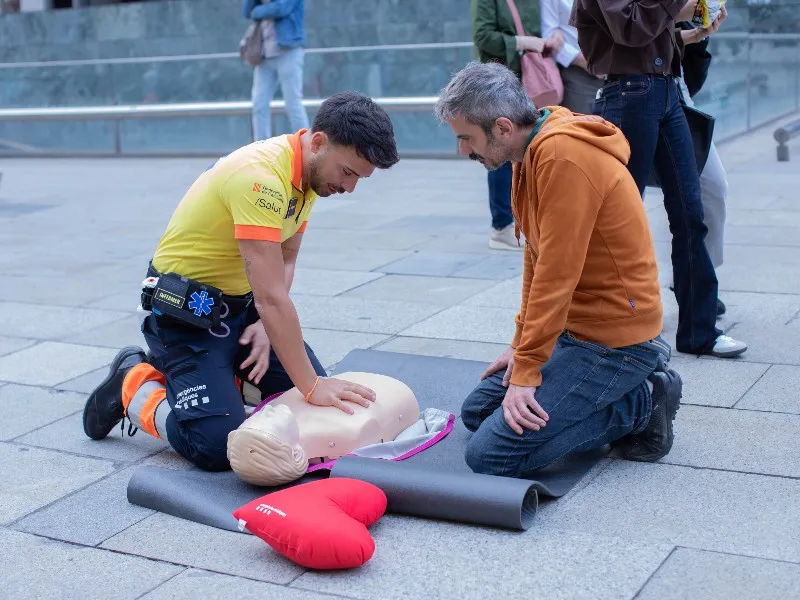
Currently, approximately 48% of individuals experiencing a cardiorespiratory arrest outside a healthcare facility receive cardiopulmonary resuscitation (CPR) from witnesses before SEM arrives. This figure marks an 8% improvement in just two years (2022-2024). Furthermore, the use of automated external defibrillators (AEDs) by non-medical personnel has risen from 6% to 9.4% during the same period.
This early intervention, combined with SEM's response, has led to better hospital survival rates with good neurological status, increasing from 9% to 12%. Dr. Xavier Jiménez Fábrega, head of the CECOS (Coordination Centre for Health Emergencies) at SEM, emphasizes the critical role of speed: "Every minute without resuscitation maneuvers reduces survival chances by approximately 10%." Bystander actions can increase survival chances two to threefold.
From CECOS, healthcare professionals provide precise instructions to initiate CPR and guide bystanders in locating the nearest AED. Dr. Youcef Azeli, an SEM doctor, notes that "the first minutes and the first hands make the difference," and that according to RAIMCAT registry data, the proportion of survivors regaining pulse before advanced life support ambulances arrived has increased from one in four in 2022 to one in three in 2024.
Núria, Albert's partner, experienced a critical situation when he suffered a cardiac arrest at home. Following phone instructions from an SEM nurse, she was able to begin resuscitation maneuvers. "I followed the SEM's instructions because I had never performed CPR before," she recalls, encouraging others to act in similar situations: "It's better to do something that might improve the situation." Her immediate action was crucial for Albert's recovery without neurological sequelae.
According to the RAIMCAT 2024 registry, the Metropolitan North Health Region recorded the highest number of cardiac arrests (23.6%), followed by Barcelona city (17.6%) and the Girona Region (16%). 80% of arrests are medically originated, primarily due to coronary disease, while the remaining 20% are due to external factors. Ventricular fibrillation is the most common cause of sudden death and can be reversed with an AED.
The Escola de Salut Catalana offers a free online course for the public on how to act in case of cardiorespiratory arrest, aiming to train individuals in the chain of survival and basic life support maneuvers.