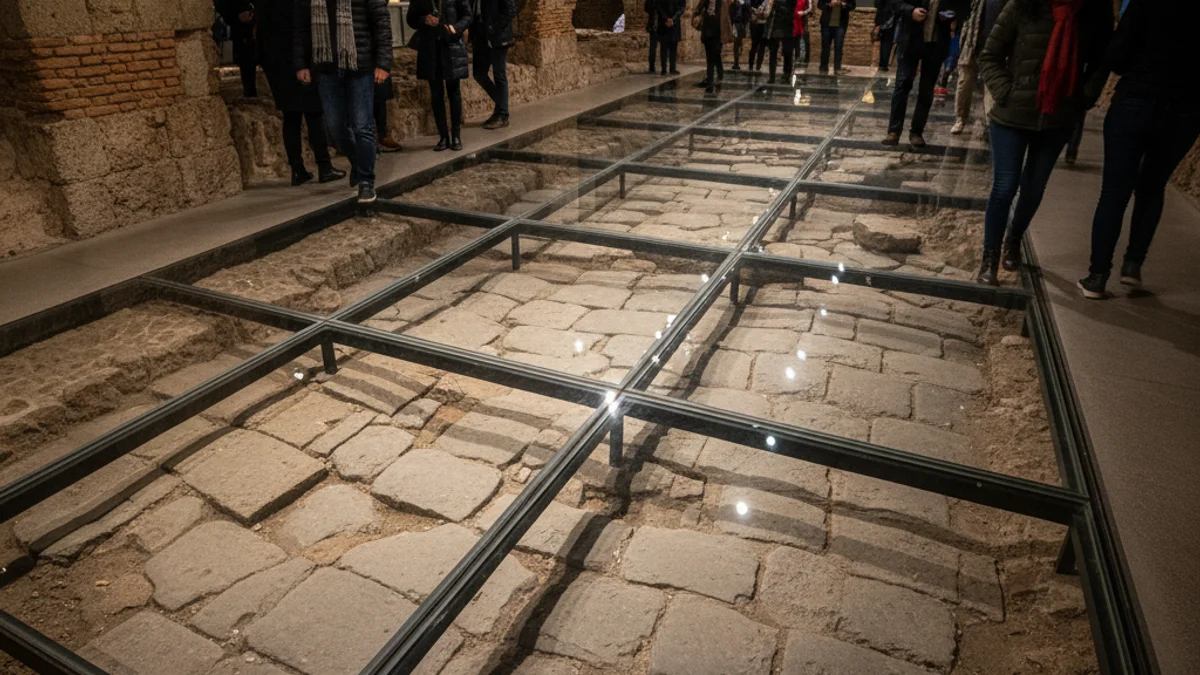
Archaeology has experienced one of its most significant moments in recent decades in the Catalan capital. The discovery of large Montjuïc stone slabs beneath Jaume I street proves that the heart of Barcino did not follow the cardo line as previously believed, but rather the decumanus.
This find confirms theories proposed by historians like Jeroni Pujades in 1595 and Agustí Duran i Sanpere in 1954, which were dismissed at the time. Current data invalidates maps based on Antoni Celles' 1835 studies, which were famously supported by Josep Puig i Cadafalch.
“"There was no official thesis with immovable foundations."
Alongside the pavement, archaeologists recovered coins from the era of Louis the Pious and commemorative pieces from the founding of Constantinople in 330 AD. The site has been preserved under protective glass for public viewing.