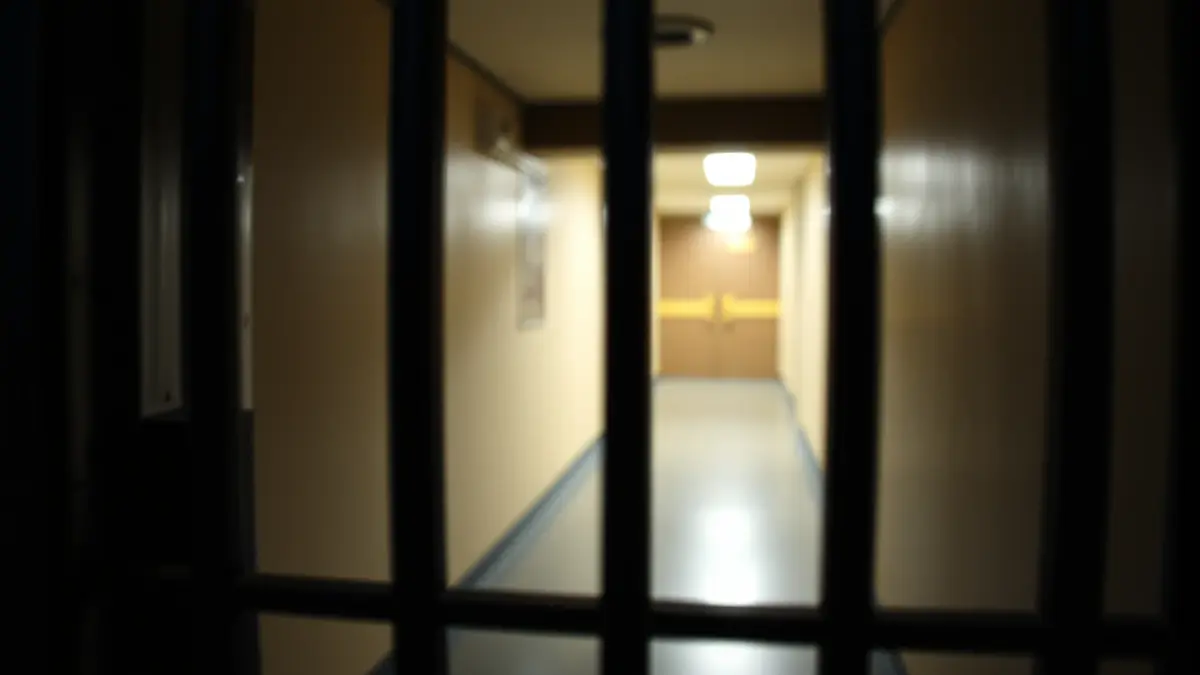
Hidden among factories and warehouses in the Zona Franca, Barcelona's CIE is a facility where undocumented individuals are held for up to 60 days before being expelled. According to a social educator, conditions are "very harsh" for individuals who, for the most part, have not been convicted of any crime. Last year, only 7% of the detainees had been convicted, indicating that most are there due to their administrative status.
The center maintains a strict confinement regime, and access for journalists is prohibited, unlike prisons. This opacity makes it difficult to ascertain the internal reality, although social organizations and testimonies have helped reconstruct daily life. Internment figures are significant: 401 people passed through the center in 2024, 592 in 2023, and 482 in 2022. Despite the announced regularization of half a million immigrants, the situation at the CIE is expected to remain unchanged.
The facilities include a waiting room for family members, mostly women and children, and a small visiting room. In December 2024, control judges requested the center's director to guarantee privacy and confidentiality during visits, but no significant changes have been observed. Once inside, life is organized with rigid schedules, locked dormitories, and constant surveillance, despite regulations defining them as "non-penitentiary public establishments".
Among the most recurrent complaints are the scarcity and poor quality of meals, according to the Irídia collective. Furthermore, incidents of mistreatment by agents have been documented. In 2024, 358 complaints were filed nationwide, 78 of which corresponded to Barcelona's CIE. Experts point out that police management is not appropriate for this type of center, as their role should be custody and security, not the management of basic services.
The cells, with capacity for four to six people, have bunk beds, a window, and a tap, but some detainees report bad odors. Isolation cells, only five square meters with a concrete bed, are particularly concerning. They are used without judicial decision, and their conditions do not meet international human rights standards, posing risks to the physical and mental health of detainees. During the pandemic, these cells were used to isolate COVID-19 positive individuals for weeks.
“"The cell does not meet international human rights standards. We have explained this to the director, and he says there is a suicide protocol, but it is basically a camera that watches you 24 hours a day: maybe you don't commit suicide, but you can go crazy."
Testimonies from former detainees reveal the harshness of the experience. One, who spent 40 days confined, recalls an incident with an agent who verbally abused him. Another, who was in the CIE in 2012, describes the lack of toilets in the rooms at that time and police indifference to basic needs. A detainee was assaulted by a police officer on March 22, 2025, leading to a hunger strike and subsequent expulsion without his complaint being addressed.
Most people interned in the CIE are eventually released. In 2024, only 37% of expulsions were carried out, while the remaining 63% were released. However, this freedom often translates into a vulnerable situation, with many former detainees ending up on the streets. A 2023 study by the Arrels organization indicates that 74% of homeless people are immigrants.
The case of a detainee who was assaulted by a police officer in December 2019 and subsequently deported without his complaint being investigated has reached the European Court of Human Rights (ECHR). This case, presented by lawyer Ton Mansilla of the Irídia collective, seeks to denounce a "structural pattern of impunity" in CIEs, where evidence often disappears and complainants are expelled before they can testify.