
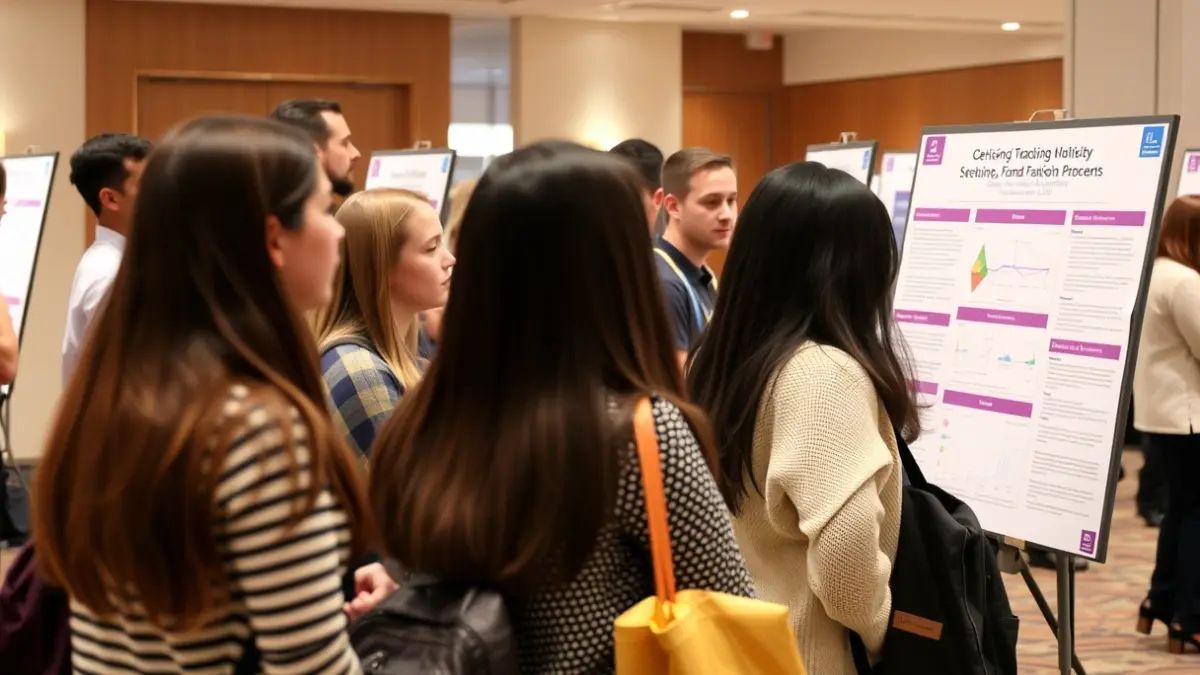
The event, named 'La recerca va a l'escola' (Research Goes to School), culminated with oral presentations of projects and scientific poster displays, mimicking professional research formats. This initiative is part of the Magnet alliances, which connect educational centers with institutions of excellence.
The students detailed the results of their investigations, which were carried out throughout the academic year with guidance from Catalan universities and leading research centers. This collaboration is crucial for ensuring the application of the scientific method in classrooms and the rigor of the studies conducted.
During the event, students representing each center explained their research process, data interpretation, and conclusions on topics they chose themselves. They transformed genuine curiosity about aspects mostly linked to their school environment into rigorous questions and investigations, addressing themes such as environmental impacts, sustainability, scientific knowledge applied to daily life, or human health issues.
Specifically, a delegation from the Soriano-Montagut school in Amposta, which maintains a Magnet alliance with the University School of Health and Sport of the Terres de l'Ebre Campus of Rovira i Virgili University, investigated what it means to be fast and why speed varies depending on the activity. Using professional instruments like photoelectric cells for precision races and radar guns to calculate throwing speed, they compared results from various tests, scientifically demonstrating that there is no single way to be fast.
To conclude the day, participants attended a workshop where they built devices from recycled materials to safely observe the solar eclipse scheduled for next August.
The 'La recerca va a l'escola' event is part of the European project #NitRecerCat 2024-26, co-financed by the European Union's Horizon Europe research and innovation program. This initiative highlights scientific dissemination and the importance of providing scientific role models for children and young people, fostering curiosity as a driving force for learning and critical understanding of the world.


