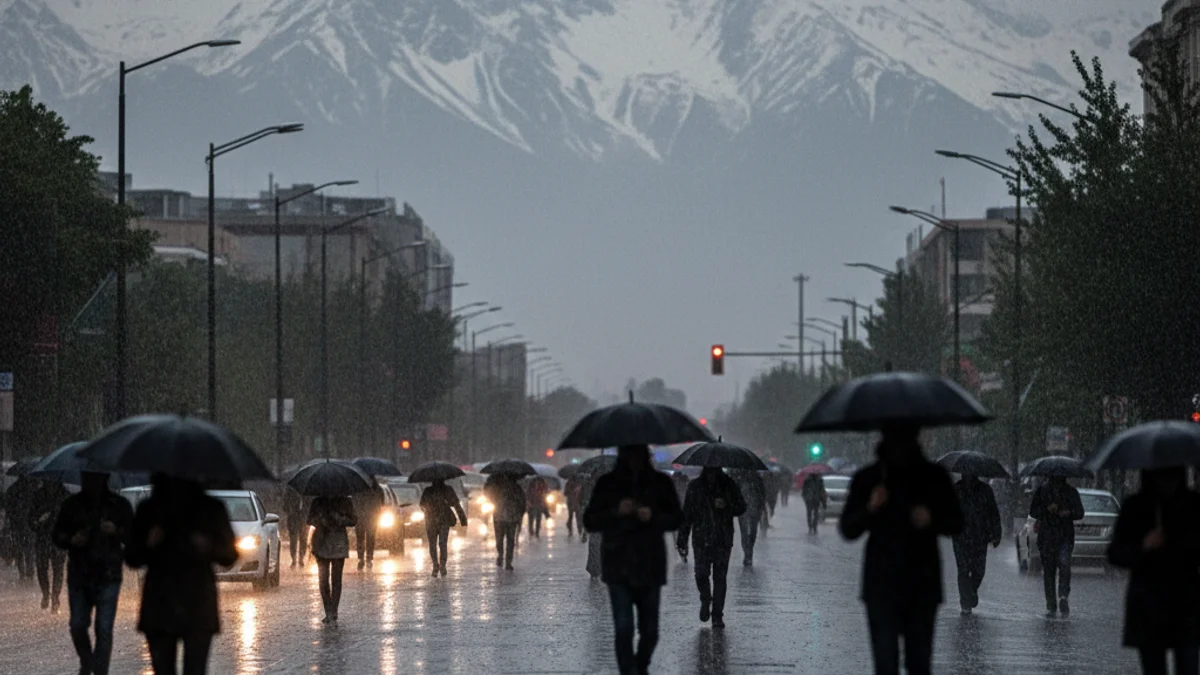
The month of January has been established as one of the most unstable and rainy in recent years. In Barcelona alone, up to 100 l/m2 were recorded, a sixth of the annual average, according to data from the Observatori Fabra. The Servei Meteorològic de Catalunya (Meteocat) has classified this period as the wettest in Catalonia since the 1995-1996 season.
“"For the moment, the maps indicate two more weeks of precipitation."
This phenomenon is explained by the action of the 'polar jet stream', which acts as a "conveyor belt of depressions" across the Atlantic. The main cause is the presence of powerful anticyclones located further north than usual, which block the passage and force the polar flow to descend to lower latitudes, directly affecting the Iberian Peninsula and the Mediterranean.
Thanks to this uninterrupted cycle of rain and snow, reservoir reserves in Catalonia's internal basins have climbed to 90.5% of their capacity, ensuring water for more than a year without restrictions. Furthermore, mountain snow accumulation has been exceptional: the automatic station at Núria, in the Pyrenees, broke its 26-year historical record on January 26, measuring 144 centimeters.