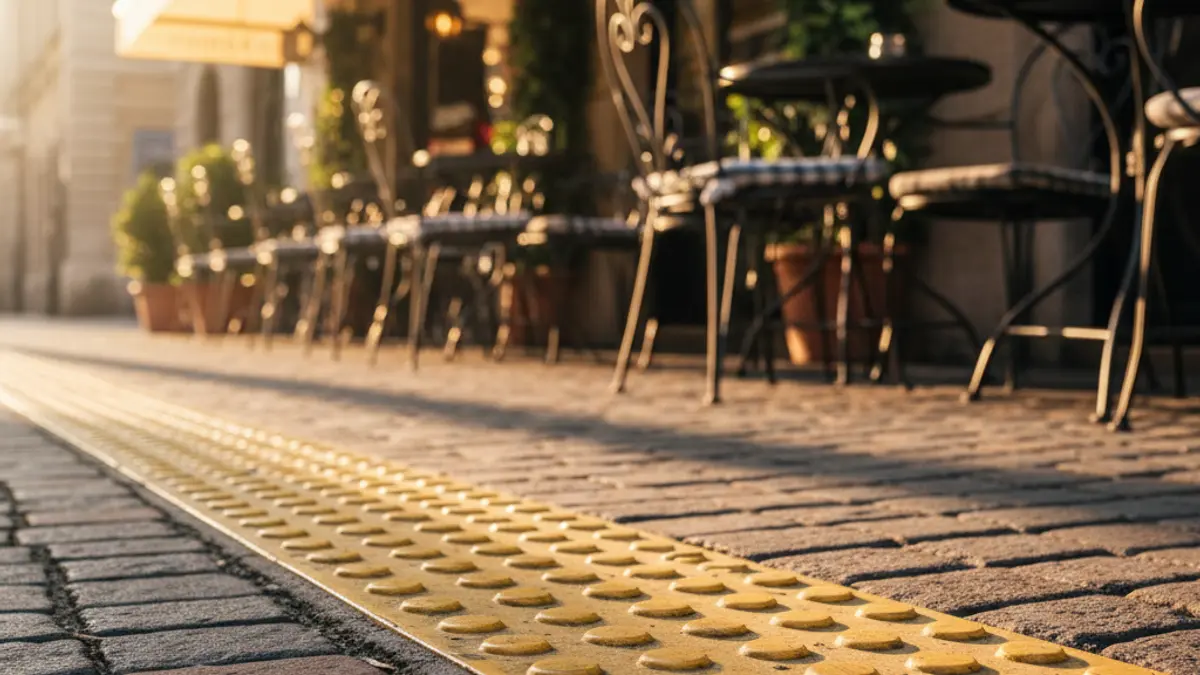
The classic image of the European cafe, with tables sheltered under awnings and close to the facade, allows customers to observe the street as if it were a show. This design, which facilitates service for waiters and offers a cozy atmosphere, is traditional in many cities.
However, this configuration can pose an obstacle for visually impaired individuals. Cities like Paris have implemented ingenious solutions, such as carpets or small plinths at the base of terraces, creating a detectable boundary with a cane without altering the table arrangement. In London, embossed tiles with dots or stripes are used to guide pedestrians along a safe path.
In contrast, Barcelona opted for a more radical change, moving terraces towards the roadway, away from the facade. This decision aims to free up sidewalks, allowing pedestrians to walk unhindered alongside shops and doorways. This measure ensures a clear wall that serves as a guide for visually impaired people.
This solution, however, has its drawbacks. Waiters must navigate through pedestrians with their trays, and customers feel more exposed to noise and traffic. The debate on urban stability and spatial psychology suggests that such details can influence citizens' emotions and behavior, raising the question of whether a more sheltered city would be emotionally more stable or if this discomfort fosters a more active and nonconformist Barcelona.