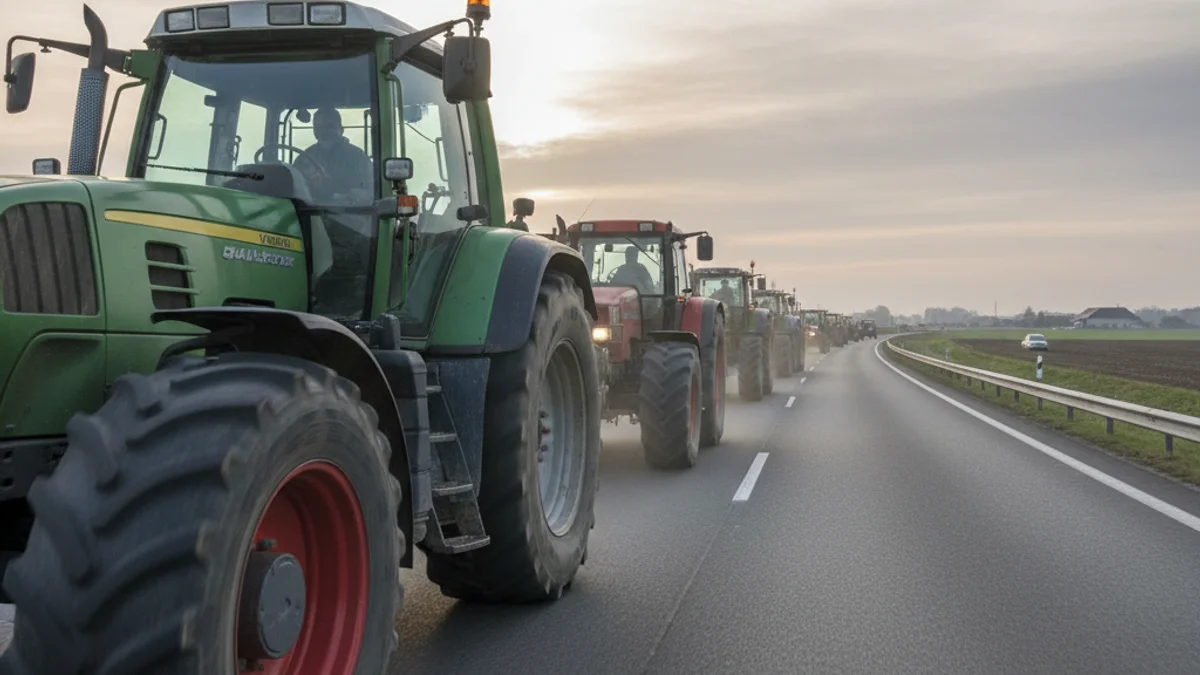
Columns of tractors and vehicles started moving early in the morning. Farmers from Girona were the earliest, leaving around 7 am with about twenty tractors. They are scheduled to meet the columns from Osona, Bages, and Vallès on the C-17 motorway near Granollers. Meanwhile, forty farmers from Tarragona departed around 8 am, primarily using cars.
“"Out of solidarity with the existing mobility problems, we will avoid causing excessive disruption and guarantee that cars will be able to access the Catalan capital."
Jordi Ginabreda, spokesperson for the Gremi de la Pagesia (Farmers' Guild), stressed their commitment to minimizing disruption. Nonetheless, the large-scale march poses a significant challenge to the road network, especially considering the current service crisis affecting Rodalies trains.
Farmers have outlined two main entry routes into Barcelona. One column will enter via the Meridiana avenue, while the other will use the Vallvidrera Tunnels and the Via Augusta, aiming for strategic visibility points for their protest.