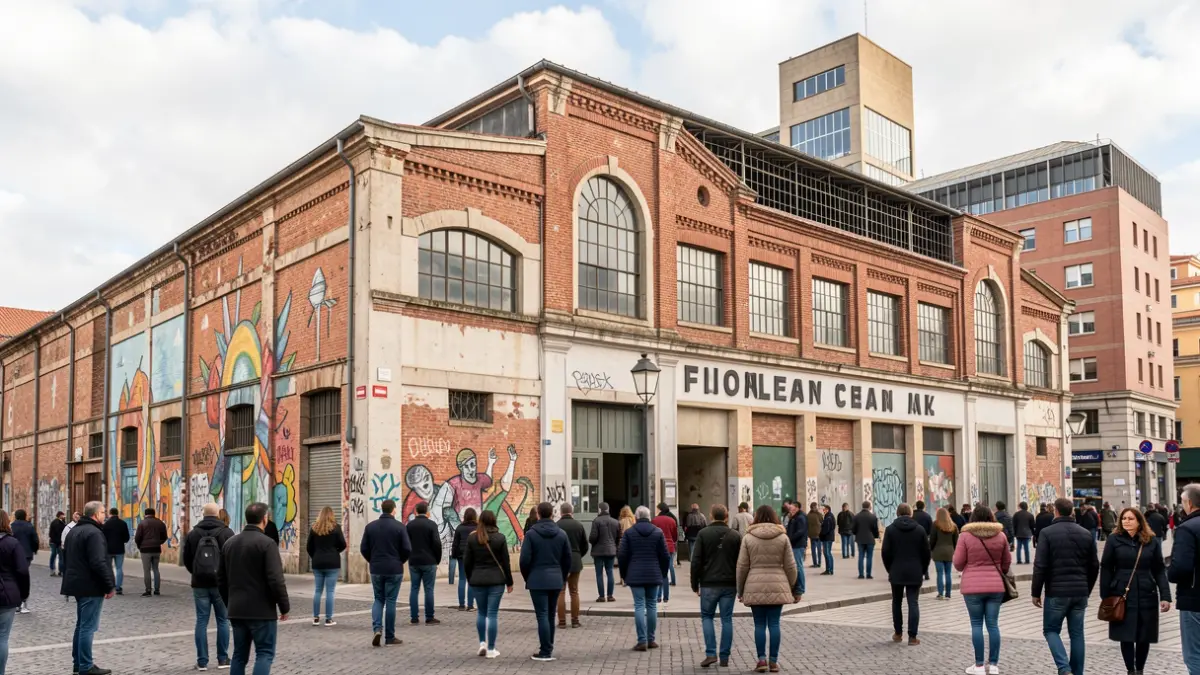
The Barcelona City Council has presented the renovation project for the former industrial complex of La Escocesa, located in Poblenou. This 11,500-square-meter site, municipal property, will host a mix of uses including cultural activities, social inclusion, employment, food research, housing, and training. The total planned investment amounts to nearly 52 million euros, of which the city will contribute half, while participating public and private entities will cover the rest. The project is expected to be completed by the year 2029.
The project, presented by Mayor Jaume Collboni, aims to transform a space with an industrial past into a hub for collective activities with a social and cooperative character. The goal is for La Escocesa to represent new ways of city-making, particularly in the less developed area of the 22@ Nord technology district. The creation of between 500 direct and indirect long-term jobs is anticipated.
Among the participating institutions are Mercabarna, the Generalitat (Catalan Government), and the Ampans foundation, which works with people with disabilities. The Johnston and Foseco warehouses will maintain their function as an artistic creation and residency space, currently hosting around 30 resident artists. The Steegmann Birkhead and Paul warehouses will house an inclusion center managed by Ampans, which will include 72 housing units for people with disabilities, job insertion activities, and an inclusive art center.
The Klein warehouse will become a center for social and solidarity economy linked to the eco-social transition, while the Shield warehouse will host the Barcelona Foodlab, dedicated to innovation in agri-food technology. Deputy Mayor Raquel Gil highlighted the combination of public and private investment in the project.
Historically, La Escocesa manufactured textiles and chemicals until the eighties and maintained a workers' cooperative until the late nineties. The site, which has suffered illegal occupations in the last 20 years, was acquired by the City Council to prevent its deterioration and develop this new project.