Antonio Manuel Rodríguez Ramos, a professor of Civil Law at the University of Cordoba, and journalist Aristóteles Moreno Villafaina, have published the book "El expolio de las inmatriculaciones de la iglesia. La mezquita de Córdoba y otros casos de libro" (Akal). They denounce a "great expropriation" of heritage in Spain, arguing that the 1946 Francoist Mortgage Law allowed the Church to register thousands of properties, including churches, football fields, walls, and rural estates, with a simple self-declaration and no documentation, exploiting its close ties with the regime's administration.
The reform of the Mortgage Law approved by Aznar's government in 1998 extended this private registration right to places of worship. This change was used to register culturally significant heritage sites in the Church's name. One cited example is the Mosque of Cordoba, historically funded by public money, which was registered by the archdiocese in 2006.
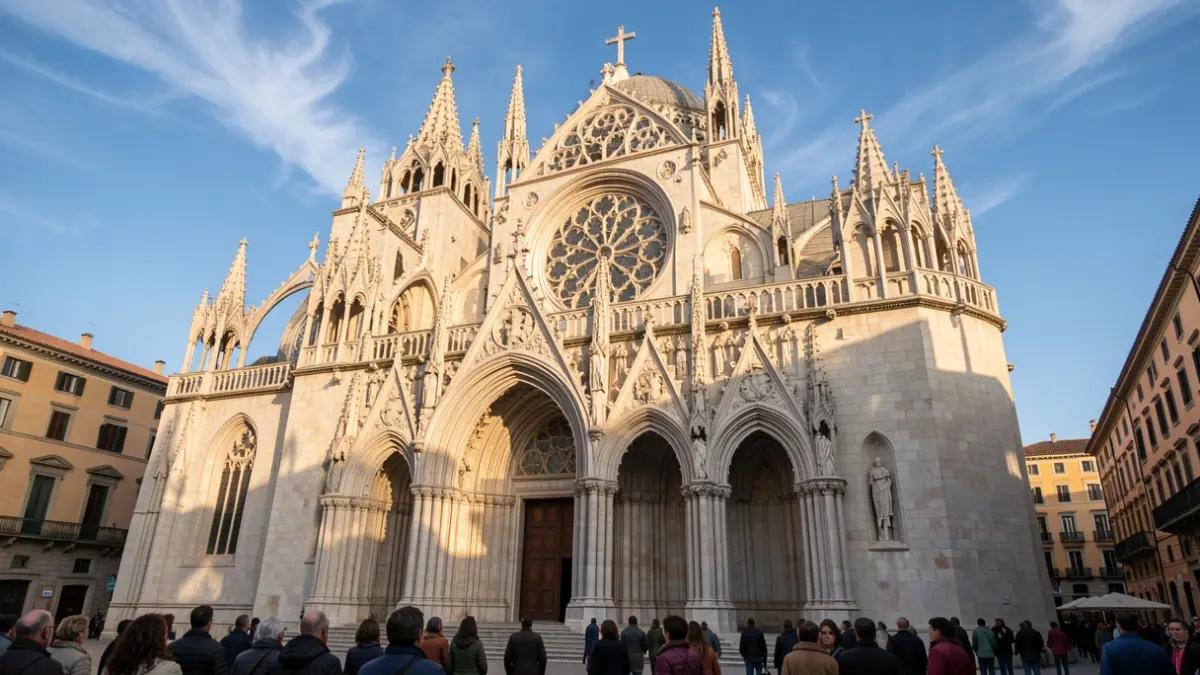
In Barcelona, the 14th-century basilica of Santa Maria del Mar, built with royal and popular contributions, was also recently registered by the Church through a self-declaration. The authors criticize the "grave negligence" of the Generalitat de Catalunya and the City Council of Barcelona, who were notified of the registration but did not file any objection.
Unlike countries like France or Portugal, which established state ownership of temples built with public funds, Spain "looked the other way," according to Moreno. Despite the law's repeal in 2015, the Church had already privatized thousands of properties. The authors propose solutions to return many of these assets to public ownership.
The book also highlights cases such as the walls of Artà (Mallorca), where the City Council successfully reclaimed ownership after litigation, or a farmer's family estate in Bages, who recovered part of the property but not the hermitage or cemetery.
In Navarra, a law on communal property and a platform of municipalities are working to identify and recover communal assets improperly registered by the Church, with the support of a dedicated civil servant.
Rodríguez laments the "citizen indolence" in the face of this "legal, patrimonial, economic, political, and civic scandal," noting that the privatization of sites like the Mosque of Cordoba, Santa Maria del Mar, or the Giralda of Seville goes largely unnoticed by society.