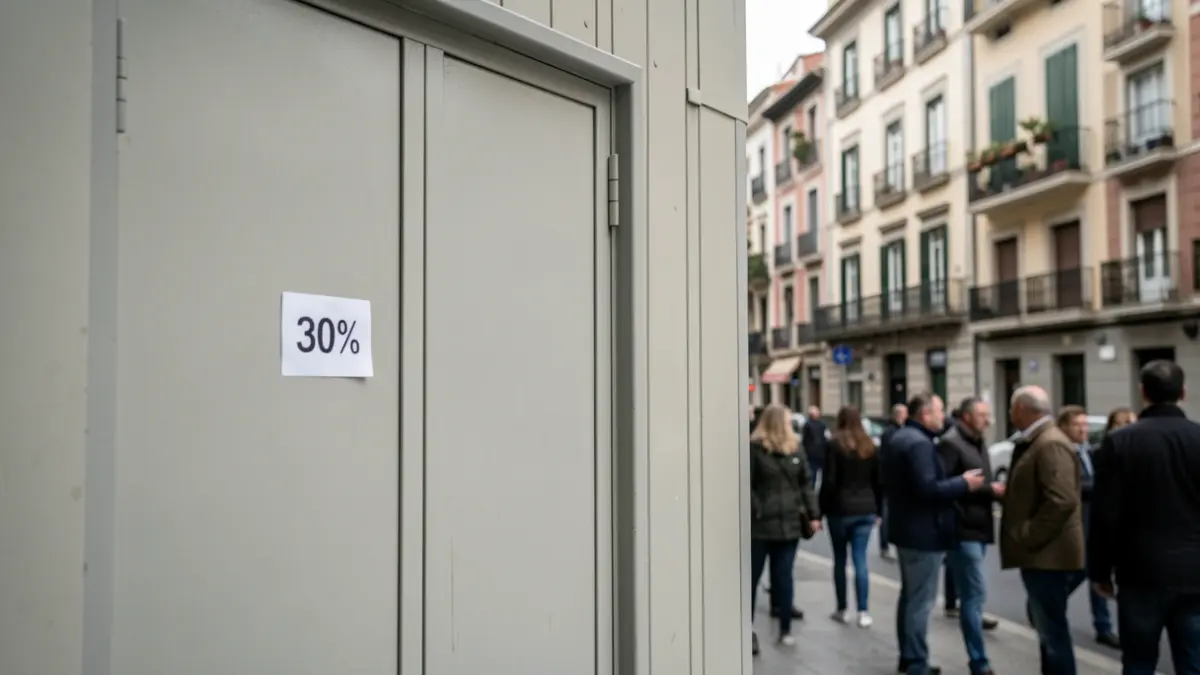
The measure, which came into effect on December 14, 2018, required 30% of new constructions and major renovations to be designated for affordable-priced housing. According to the PSC municipal government, only 34 homes have been generated in nearly eight years.
This figure was revealed by the Deputy Mayor for Urban Planning, Laia Bonet, during the July municipal plenary session, amid a debate on a proposal by the PP to repeal the rule and renegotiate it with the private sector. The popular party's proposal, along with that of Vox, failed to pass, with Junts abstaining and PSC, BComú, and Esquerra voting against it.
The PP, led by Daniel Sirera, urged the creation of a new regulation based on public-private collaboration, arguing that "there is something worse than being wrong, and that is continuing to apply a policy out of ideological pride." Damià Calvet (Junts) agreed on the need to modify it to make it "useful," warning that "we are facing the last opportunities to rectify."
Deputy Mayor Bonet responded that "we must do everything possible to reform it in this term; we do not give up and will fight to have a clearly effective 30%." Despite the dialogue, neither group seems willing to make the first move to negotiate.
During the session, incidents related to public works were also discussed, such as sinkholes in Sant Gervasi and Vallbona, and a gas flare in Sants. Mayor Collboni reiterated his "apologies" to the affected residents and criticized "errors by companies or administrations that disrupt people's lives."
Furthermore, a proposal from the PSC, supported by BComú and ERC, was approved, urging the Congress of Deputies to amend the urban leasing law to allow for "regulating or moderating increases in commercial rents." The organization Barcelona Oberta, while sharing concerns for local commerce, disagrees with this measure, advocating for "more confidence and more incentives."