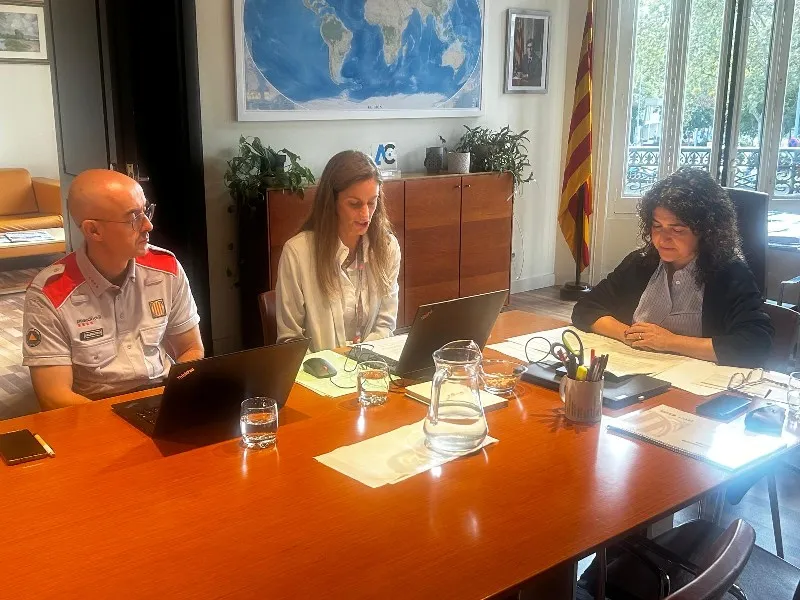
The Government Delegate in Catalonia, Carlos Prieto, presented the automatic pre-scheduled appointment project for immigration procedures at the National Police Station in L'Hospitalet on Friday, January 30. This initiative aims to simplify administrative processes and actively fight against the resale of appointments. The first automatically scheduled users are expected to arrive at the station on Monday, February 2.
Moving forward, when a residency permit is authorized for a person residing in L'Hospitalet, they will no longer need to manually request an appointment to obtain the Foreigner Identification Card (TIE). The new system will cover over twenty of the nearly 60 procedures managed by the immigration office, representing approximately one-third of the monthly applications received in the municipality.
“"Until now, it was necessary to access the website, click, and search for a pre-scheduled appointment, but this is no longer necessary. With this change, we indicate that, within approximately one week, the interested person will receive an SMS notifying them of the assigned date and time of the appointment."
It is anticipated that between 250 and 500 automatic appointments will be issued monthly during the trial period. This model has previously been implemented successfully in the province of Castellón and, since July 2025, in Girona, yielding “very positive” conclusions, which encouraged its implementation in L'Hospitalet.