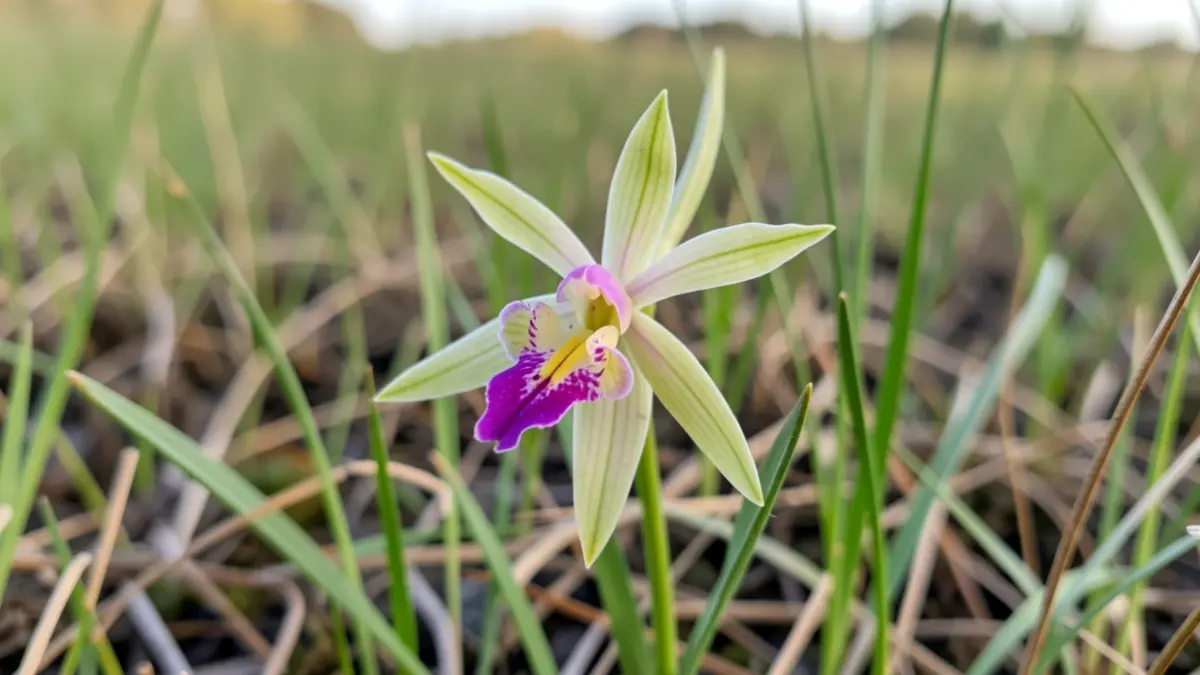
Orchids in the Llobregat Delta are small plants, with stems ranging from 20 to 50 cm that support the flowers. Their leaves are a deep green, elongated and oval-shaped, either twining around the stem or grouped at the base. Hidden underground, about five centimeters deep, is a spherical tuber that gives rise to the plant. These tubers always appear in pairs: one will dry out at the end of the season after growing the plant, while the other, full of reserves, prepares the plant for the following year.
Flowering plants are essential for biodiversity, dispersing pollen via wind or insects, thus aiding pollination. Orchids play a fundamental role in this process due to their scent and unique shapes and colors. Some species emit fragrances that attract insects like butterflies, especially at dusk. Others, like the yellow bee orchid, mimic the shape of female insects to attract males, who, in attempting to mate, end up pollinating the flower. In cases of self-pollination, the pollinia bend towards the ovary, fertilizing the flower.
In the Llobregat Delta, 23 orchid species have been identified, representing approximately 30% of the over 80 varieties found in Catalonia. These plants inhabit three characteristic natural environments: Mediterranean salt marshes, the vegetated backdunes of beaches, and coastal pine forests on sandy soil. Unfortunately, these habitats are threatened by human pressure and infrastructure development.