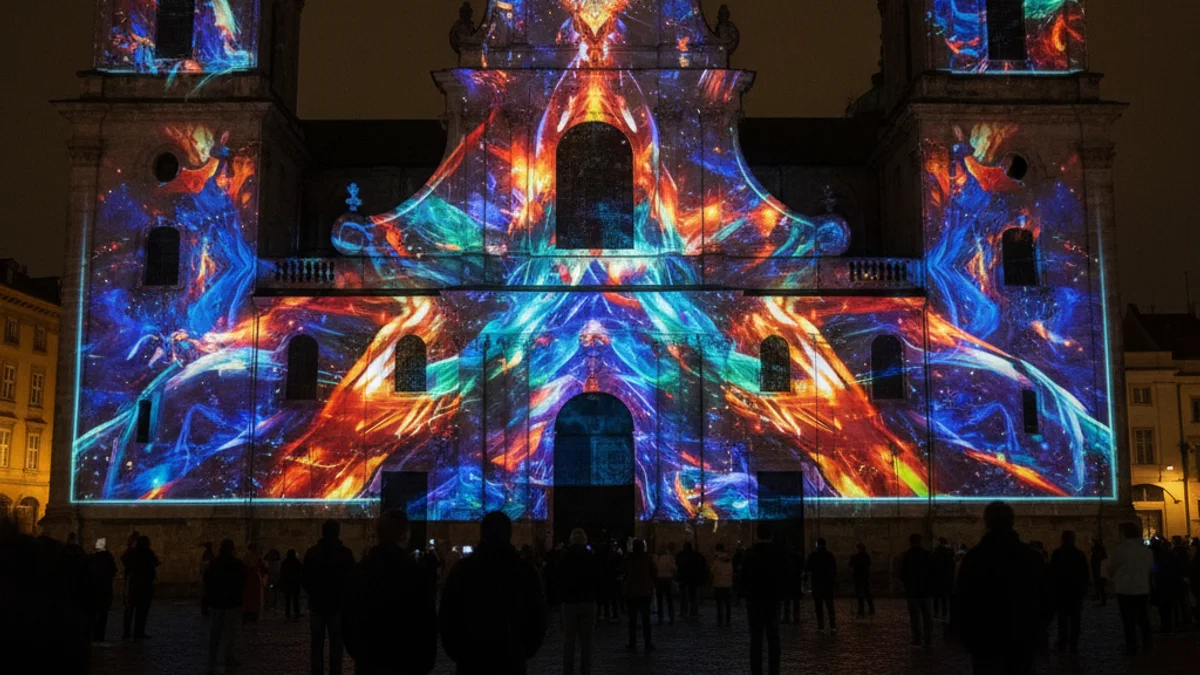
The event, which combined art, technology, and architecture, illuminated the “night landscapes” of ten districts across Barcelona. The City Council estimates that the festival attracted approximately 300,000 visitors by the night of its closure.
This edition featured works by 12 professional creators, including filmmaker Albert Serra, artist Laia Estruch, and creator Lola Solanilla, alongside 18 installations by university design and architecture schools. The festival also recovered emblematic pieces from previous editions, such as works by Cabosanroque and Antoni Arola.
The event combined art, technology, and architecture, with proposals that incorporated a multidisciplinary dimension, including lighting, dance, live music, and visual arts.
The festival marks the end of Maria Güell's tenure as artistic director, with the process to choose her successor open until February 17. Coinciding with Barcelona's designation as World Capital of Architecture 2026, granted by Unesco and the International Union of Architects (UIA), Llum BCN expanded its presence with one artistic installation in each of the ten districts.
The capital status was celebrated with a symbolic gesture: eight World Heritage Sites in the city dyed their facades blue. The capital's program will emphasize the transformative values of architecture as a tool to improve quality of life and address crucial issues like climate change.