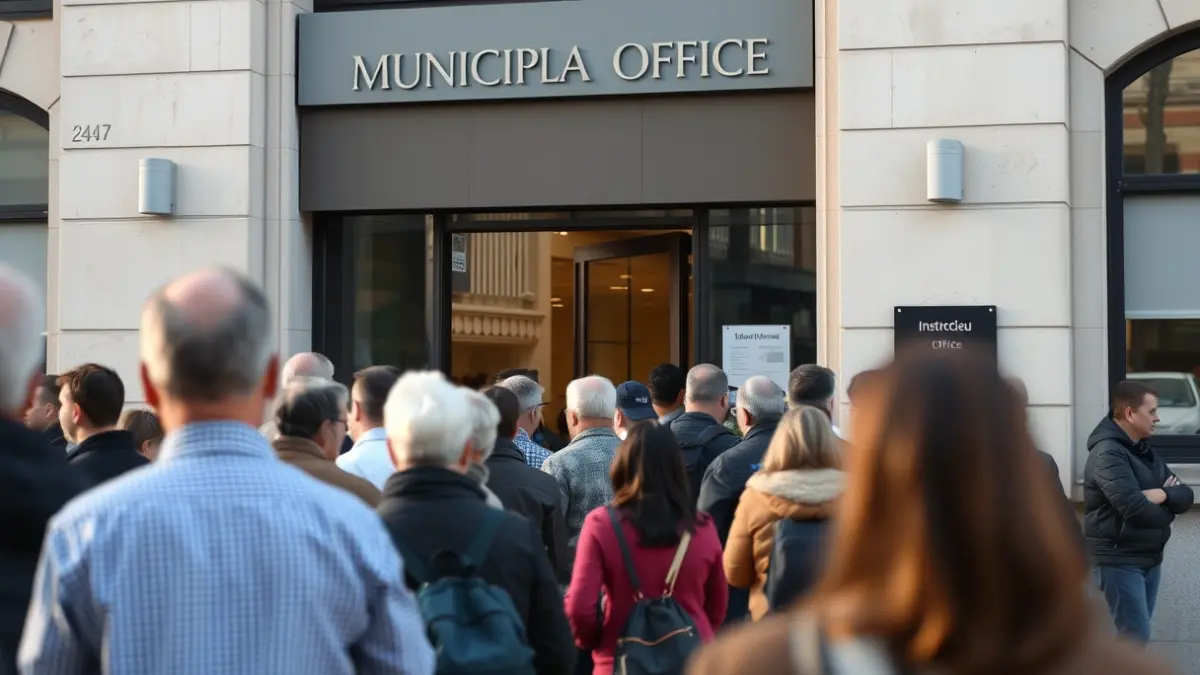
The situation at citizen service offices in Barcelona, such as those in Monumental or Plaça Sant Miquel, involves long queues, a reality replicated at SAIER, the municipal service for migrants and refugees. In La Florida, L'Hospitalet de Llobregat, collaborating organizations are also overwhelmed by the unexpected volume of applications.
“"Desperate people are coming to us from Igualada, Sant Vicenç dels Horts, Manresa... We can't take any more."
A representative from La Fundició foundation, which initially aimed to assist with general procedures, laments that the vulnerability report requirement, introduced by the Spanish government, has drastically altered their work. This organization has had to complete 2,000 reports, receiving people from various locations such as Igualada, Sant Vicenç dels Horts, and Manresa, and criticizes the lack of support from local councils and the Generalitat.
In La Florida, spaces have become too small, and regular activities have been affected. Volunteers work shifts, cover photocopy expenses, and bring their own equipment to meet demand. Similarly, at Àmbit Prevenció, an NGO in Barcelona's Bordeta neighborhood, they have had to reduce their hours to manage vulnerability reports, as they were completely saturated during the first week.
The president of this organization believes that the long queues are a sign of the "degrading and inhumane treatment" of migrants by institutions. The Regulización Ya movement, which promoted the ILP for this process, criticizes that people have to queue at night and that the Barcelona City Council and the Generalitat are not acting with the same speed as they did with the arrival of Ukrainian refugees.
“"With Ukrainian refugees, everyone was quickly attended to in habilitated centers like the Fira."
A spokesperson for Regulización Ya points out that, despite criticisms regarding the lack of specificity in the Spanish government's instruction, the text is clear, and the demand for a census registration or vulnerability report by social services are "self-serving interpretations." They add that the minimum five-month stay can be proven with alternative documents such as transport tickets or library cards.
The requirement for local councils to issue reports only to their residents complicates the process for those who cannot prove residency, such as those living in sublet accommodations, those not registered by landlords, or those living on the streets. In Tordera, social services have chosen not to require census registration to facilitate regularization, also assisting people from other municipalities. A service manager in Tordera criticizes that the Spanish government has not considered the experience of the Col·legi del Treball Social de Catalunya.
The participation of organizations in the process is non-profit, with the aim of supporting the people they already serve. The Ministry of Inclusion has authorized dozens of associations to process the required documentation through the Mercurio platform. However, the urgency has focused efforts on vulnerability reports, and many well-intentioned associations have had to organize themselves without prior experience. Furthermore, they encountered the difficulty that using the Mercurio platform required the volunteers' personal digital certificates.