Humanity recently returned to the Moon with NASA's Artemis II mission, setting a new record for the farthest crewed space journey. With a new human lunar landing planned for early 2028 and the construction of a permanent lunar base by 2029-2030, questions arise about the long-term viability of life in space.
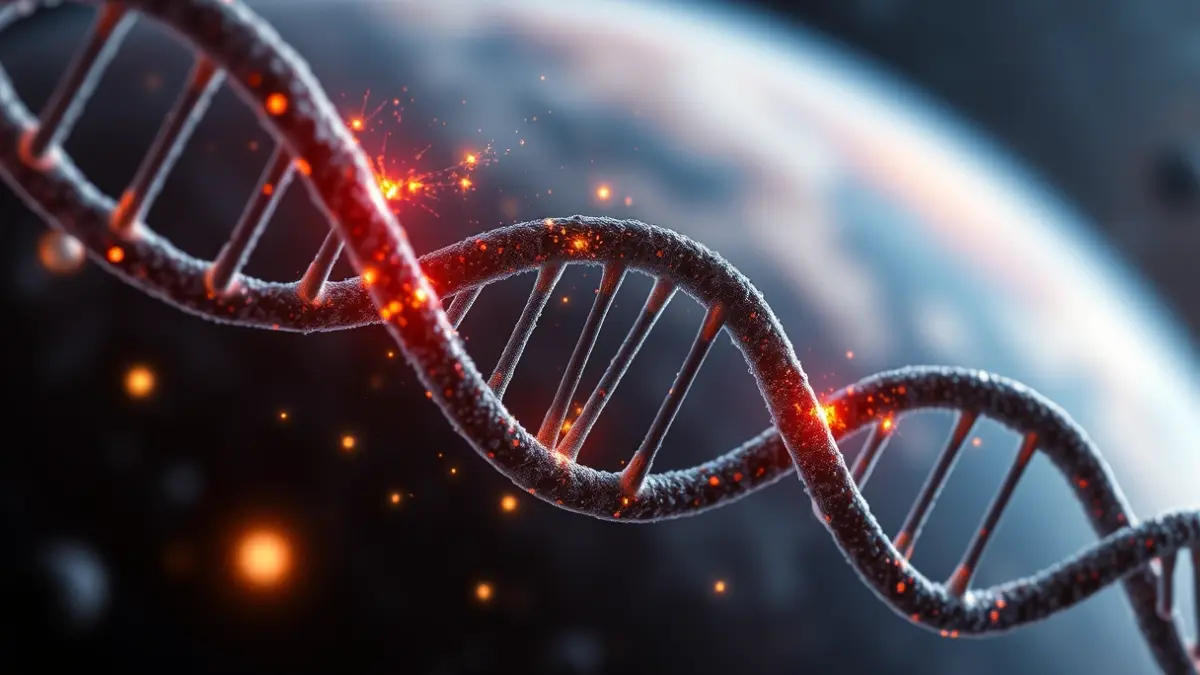
Highly energetic cosmic radiation poses a significant threat to human health, capable of damaging DNA and causing cancer and neurodegenerative diseases. Unlike Earth, where the magnetosphere and atmosphere act as protective shields, in space, cellular repair mechanisms would be insufficient against continuous exposure.
“"Cosmic radiation will literally fry the DNA of our cells, and scientific articles have already shown that this will lead to an increase in cancer and neurodegeneration in astronauts."
Given this reality, some scientists propose genetic modification as a potential solution. The idea would be to edit astronauts' genomes or transfer genes from radiation-resistant organisms, such as tardigrades, to enhance their survival capabilities in hostile environments.
This proposal, which would include genetic editing in embryos to create more resilient generations of humans, sparks an intense bioethical debate. While this practice is prohibited in Europe and other Western countries, some Asian nations consider it potentially feasible, as seen in cases of embryo modification in China.
A research group from the University of Barcelona, led by a cancer biology expert, will participate in the international IGEM competition in Paris to explore human genetic editing. The goal is to investigate the incorporation of genes from tardigrades, planarians, and axolotls to assess the possibility of transmitting this modification to all body cells and making it heritable, with future human colonies on Mars in mind.