On April 18, 1946, in a context of Francoist repression, nearly forty representatives of Catalan independentism clandestinely gathered at the Can Batlle farmhouse in Dosrius (Maresme). This meeting, protected by armed squads, was the first General Conference of the Front Nacional de Catalunya (FNC), where the decision was made to attempt the physical elimination of the dictator on Catalan territory. The Fundació Reexida has commemorated this anniversary with relatives of the participants in an event at the same farmhouse.
At that conference, FNC militants, hopeful after the recent defeat of Nazism and fascism in Europe, approved various strategies. Among them, an operation to counterfeit pesetas was agreed upon, with technical means provided by one of the members, to finance the organization. The most prominent point was the formal approval of an assassination plot against the dictator during one of his visits to Barcelona. The Military Section of the FNC had meticulously studied the dictator's established routes.
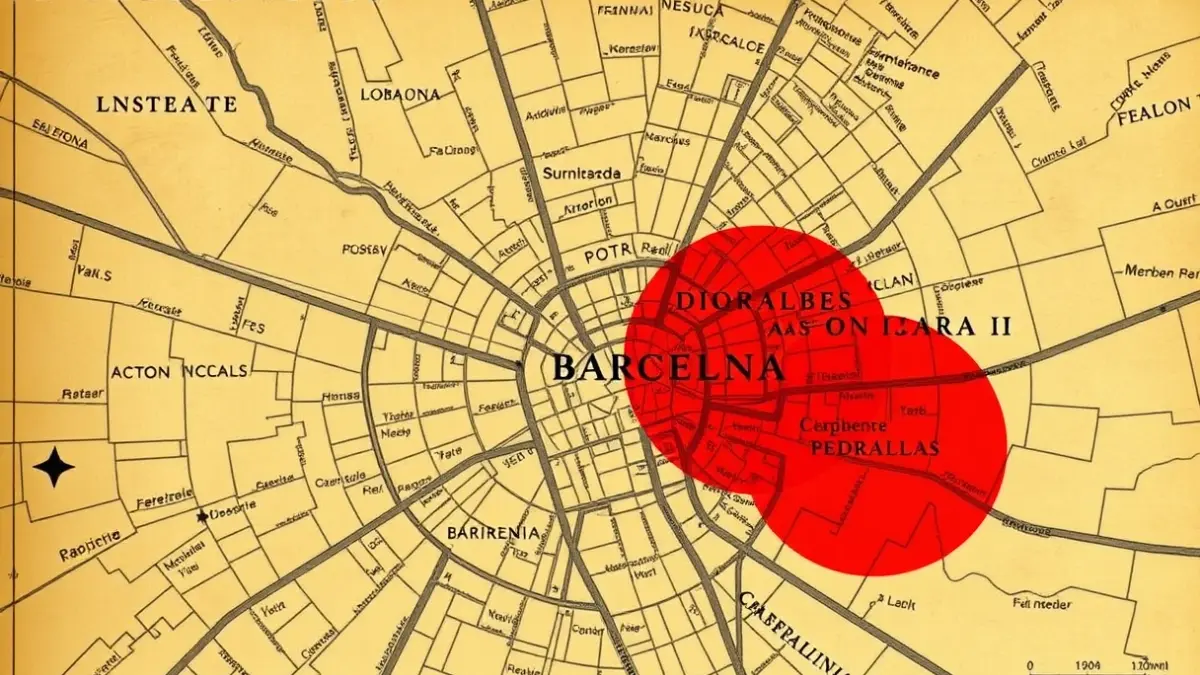
A spokesperson for the foundation explains that, despite there being no direct documents in the Front's archives about these intentions, the memoirs of the head of the FNC's military section, titled Una vida per Catalunya and recently re-edited, detail all the preparations for the operation. These memoirs reveal the logistical details to eliminate the dictator during his stays at the Palau de Pedralbes. The urban configuration of the time, with Diagonal Avenue as a dead-end street that did not connect directly with the Esplugues road, made official routes very predictable.
The military head of the FNC used his technical and cartographic knowledge to design the operation, detailing the necessary material to set up two "traps" with explosives: a thousand meters of bifilar line, battery packs, iron boxes, and steel tubes of various diameters. They already had the explosive; the challenge was to transform the fuse detonators into electric ones to ensure detonation precision. The plan was to place explosive charges at strategic points, with the stretch between Esplugues and Collblanc chosen as the action site, lifting cobblestones to hide the explosive and activating it remotely as the entourage passed.
The year 1946 marked a turning point in the resistance's activism. Militants were trained in handling weapons and dynamite in the Baix Llobregat. The weaponry, which included machine guns and ammunition, came from the French resistance via the Pyrenees. Parallel to the assassination planning, the FNC carried out propaganda and sabotage actions, such as placing devices at the Victory monument, at the SEU premises in Barcelona, and at the window of the Military Government.
Despite the initial momentum, the frantic activity of the FNC's Military Section led to its downfall. Two months after the conference, in June 1946, a plan to display a senyera and an estelada at the Montjuïc Stadium during the Copa del Generalísimo final was thwarted by the arrest of one of its members. This arrest led to the fall of most of the Front's Military Section on June 13, with fourteen arrests, including its leader. The arrested were tortured and sentenced to long prison terms, thus crippling the organization's operational capacity at that time and preventing the execution of the plan against the dictator.
A professional tailor, who joined the FNC's military section in 1943, was in charge of making the senyeres. He used his tailoring workshop on Riera Alta street in Barcelona as a clandestine logistical center, where the noise of sewing machines camouflaged the printing press for the magazine Per Catalunya. Additionally, with his skill, he made Catalan flags, then prohibited, and hung them in emblematic places such as the Port of Barcelona cable car (1944), the Sagrada Família (1945), and the facade of the University of Barcelona (1946). According to a foundation spokesperson, he bought Spanish flags to transform them into senyeres.
The tailor's son details that his father was very cautious in his activity, to the point that some colleagues would pass him the magazine he himself printed to read. He recalls how as a child he would accompany his father to friends' houses, many of whom seemed involved in the clandestine activity. Despite not knowing his father's role in the Dosrius summit, the tailor was arrested on June 13, along with his squad, and sentenced to 15 years in prison. He avoided the death penalty thanks to international pressure. Even after being released from prison, the police searched his house in anticipation of possible attacks during the dictator's visits to Barcelona.
The host of the Dosrius meeting was a cultural and political activist, who made his ancestral home available to the FNC. This house, now owned by foreign proprietors, is located near Barcelona but away from the town, in a discreet location. A relative of the host recalls how her uncle explained that he held meetings there. The participants of the 1946 conference arrived with fixed itineraries, simulating a social gathering. The relative emphasizes her uncle's "pacifist" figure, who collaborated with Allied secret services, providing information and helping nearly 800 people flee into exile through the Pyrenees. Despite the silence about the meetings, the host instilled Catalanist values, insisting that Spanish should only be spoken to be understood and to show Catalan identity.