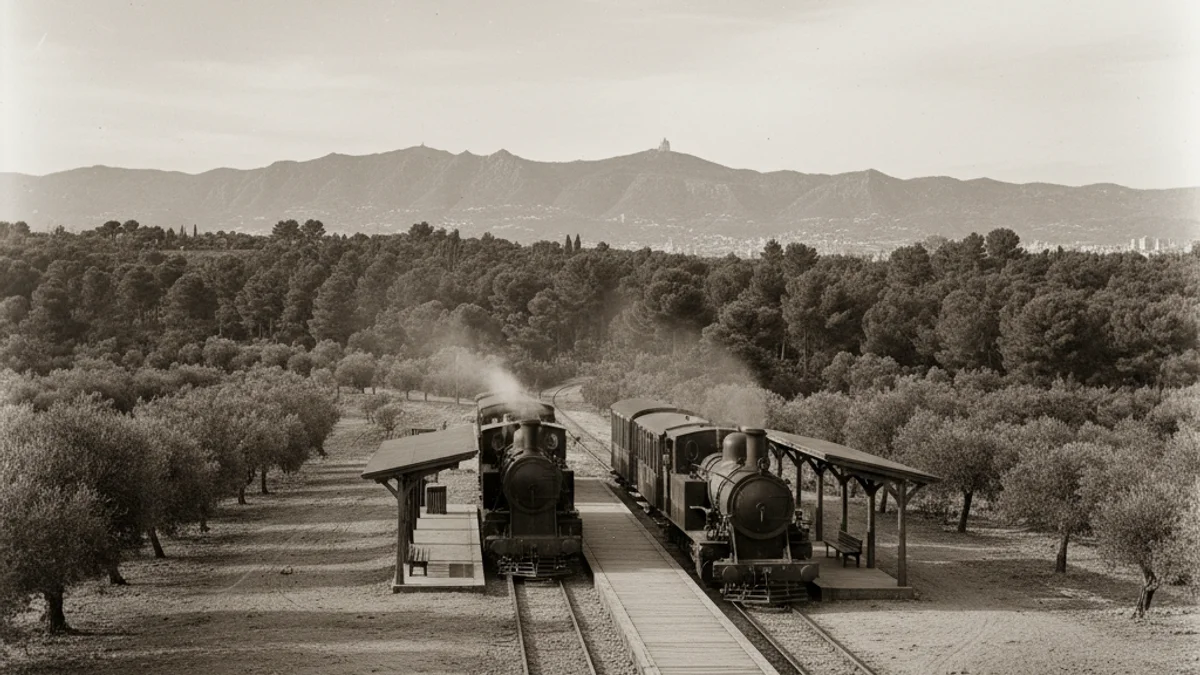
The heart of Barcelona looked unrecognizable in the mid-19th century. According to images from the Lluís Tuells Fund, the space now occupied by Plaça de Catalunya was an esplanade flanked by a dense forest reaching Collserola.
At that time, the area was dominated by railway infrastructure. The Sarrià train, opened in 1862, ran along Balmes street, while the Martorell line station was located at Ronda de la Universitat.
“"The line caused a significant division, and accidents were very common due to its proximity to new buildings."
The demolition of the medieval walls and the Cerdà Plan ended this rural landscape. The railway facilities were closed on October 25, 1882, to allow for the district's residential expansion.