Living near entertainment areas or traffic arteries exposes citizens to noise levels that exceed acceptable limits, even in spaces designed for rest like urban parks. This reality highlights the lack of consideration for noise pollution in urban planning until recently.
“"This park, in Esplugues, is a clear example that cities must be planned taking into account noise pollution."
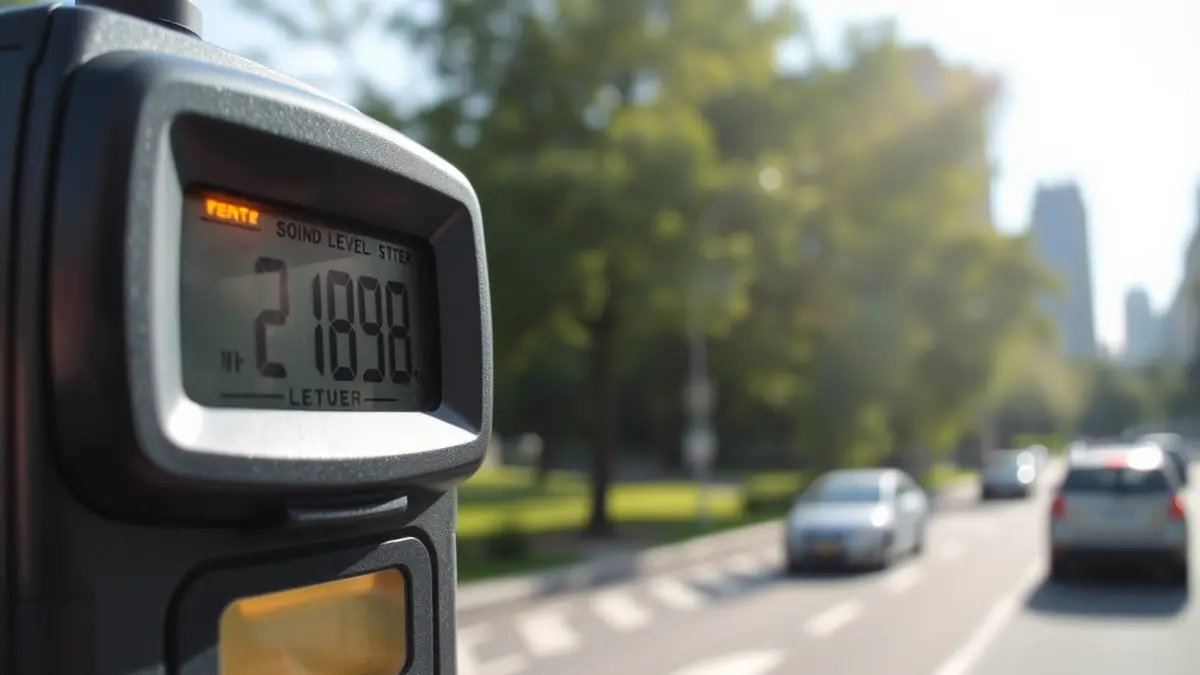
A clear example is found in a park in Esplugues, where over 60 decibels are recorded on a weekday morning, far exceeding the recommended 50 decibels for a quiet area. Proximity to fast roads like the B-30 significantly contributes to these high levels.
Measures to mitigate noise include traffic management, reducing its volume or speed, and the installation of acoustic screens or perimeter green barriers. These solutions are crucial for transforming noisy spaces into effective resting areas.
The European Environment Agency estimates that noise pollution is responsible for 16,600 premature deaths and 72,000 hospitalizations annually in Europe. Furthermore, it affects the quality of life for millions of people, causing discomfort to 32 million and sleep disorders to 13 million.
“"Citizens living near places with heavy traffic, or exposed to high noise levels, experience an increase in heart rate and blood pressure, so they may have more cardiovascular diseases, for example."
The health effects are numerous and severe, including stress, irritability, depression, chronic pain, hearing loss, sleep disorders, and cardiovascular diseases. In children, it can affect learning, memory, and attention, and its possible link to more serious illnesses like cancer is being investigated.
In Barcelona, premature deaths attributable to noise and air pollution exceed 1,200, according to ISGlobal data. This correlation is due to traffic being a common factor in both forms of pollution. Reducing and improving transport management would not only save lives and improve health but also contribute to combating the climate crisis and increasing urban resilience.
Researchers and experts gathered at the Acusticat congress in Barcelona call for integrated management of these problems. Traffic reduction simultaneously improves air quality and noise levels. Although many European cities have noisy green areas, urban planning that integrates noise pollution reduction from its origin is essential.
“"The problem is that cities are already built, poorly planned, and acting on them is almost impossible. So the best approach is an integrated effort: reduce traffic, create green barriers, connect places without quiet zones so that access to areas with good acoustic results is more open to all citizens..."
New urban planning must seriously incorporate noise considerations. Initiatives like Barcelona's superblocks have shown positive results, such as a 3.5-decibel decrease in average daytime noise in the Sant Antoni superblock. However, the complexity of managing nighttime noise, influenced by leisure, underscores the need for integrated and continuous actions.