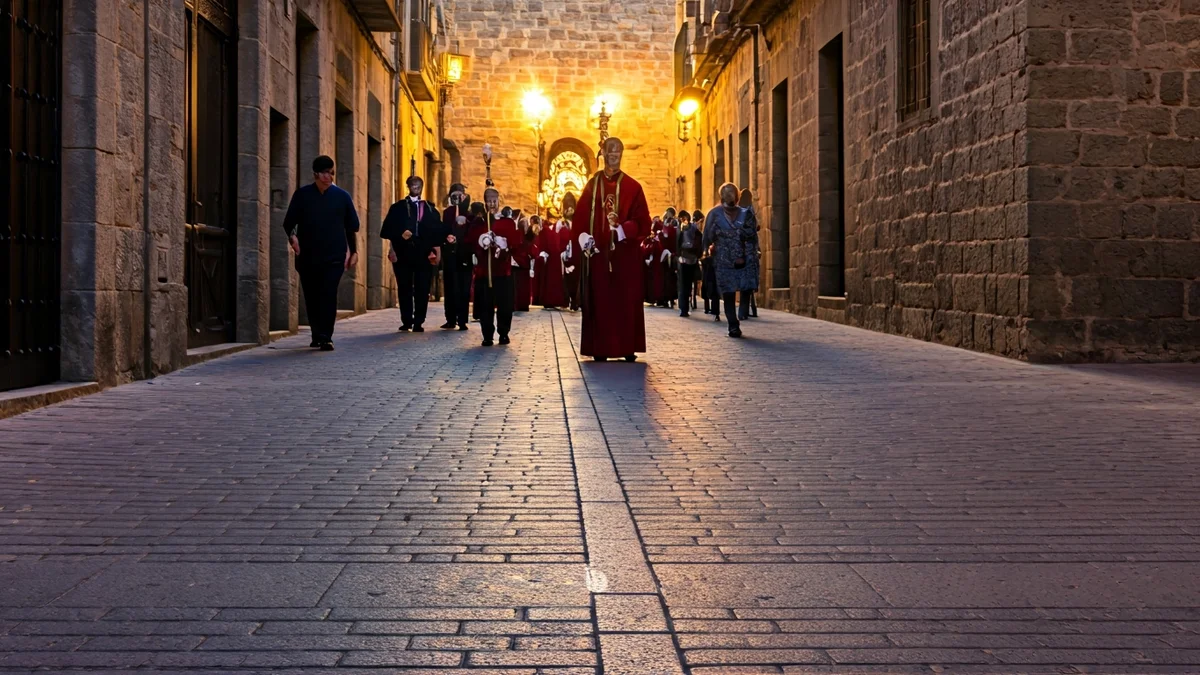
After the period of Lent, Montblanc begins to breathe the characteristic atmosphere of Easter Week. This collective sentiment is built with elements such as the rehearsals of the armed groups through the streets, the resounding of drums and bugles, the drawing contest in schools, and the start of the Cultural Week of the Congregation of the Purest Blood with the traditional Proclamation.
Despite living in a secular state with diverse sensibilities, Christian roots are part of the collective DNA, having shaped values, inspired culture, and left their mark on art, festivals, folklore, and even gastronomy. Easter Week is a living and palpable expression of this.
These dates are not just a set of traditional acts or a festive calendar. They are, above all, a legacy we have received and have the responsibility to preserve and transmit.
The celebration is experienced from different perspectives: some from faith, actively participating in liturgical acts; others from family tradition, as a moment of reunion and generational continuity; and there are also those who approach it from a more cultural or festive angle, enjoying the atmosphere and the rich heritage these days offer. All these viewpoints are legitimate and complementary, as Easter Week is precisely a meeting point for diverse sensibilities.
Beyond personal beliefs, the narrative revived these days, the testimony of Jesus, invites reflection on the meaning of life, death, truth, forgiveness, justice, and solidarity. The simple act of asking these questions is, in itself, a valuable exercise.
Regardless of how one chooses to experience these dates, it is important to pause, observe, and allow oneself to be imbued with the spirit that returns to the streets each year. The Congregation of the Purest Blood, with its armed groups, brotherhoods, and bands, and the Parish of Santa Maria, are recognized for their silent and valuable work, being the soul of Montblanc's Easter Week.