The new greenway linking Girona and Celrà, a long-awaited project completed this June, has been operational for a week. After its initial days of use, the cycling infrastructure has received a predominantly positive evaluation from users, who celebrate the improved safety and convenience of their journeys.
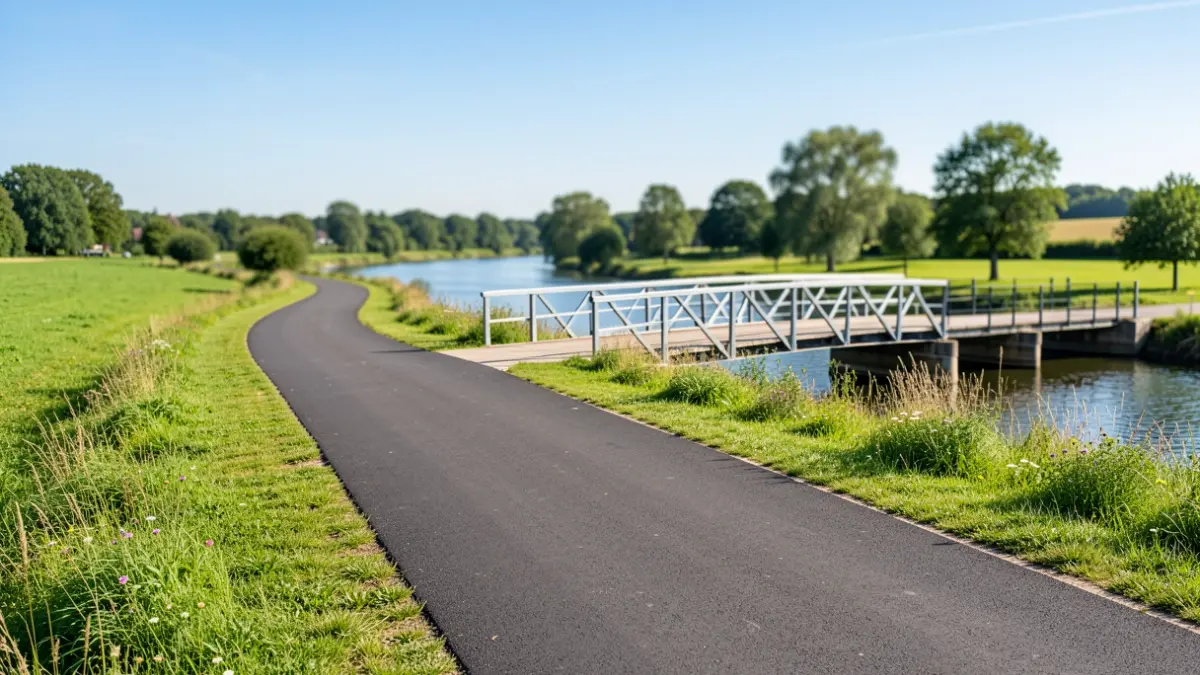
Users like Amanda Ortiz emphasize that the new section has allowed them to avoid the dangerous main road, describing the connection as "very comfortable." However, this general satisfaction is not universal. The organization Bicicleta Club de Catalunya (BACC) has voiced criticism via the social network X, deeming the stretch "narrow and lacking safe overtaking space," particularly concerning its shared use with pedestrians. They also question the design of the over half-kilometer metal bridge crossing the Ter river, though they acknowledge that "some will say it's better than nothing."
From the platform Mou-te en Bici, president Xavier Corominas, while agreeing with some of BACC's observations, highlights the significant change this path represents for the Girona region. "From nothing to what we have is a big change," he states, suggesting that prior consultation could have led to a "formidable" outcome. Corominas also defends the metal bridge, noting that last Sunday "children, the elderly, and all kinds of bicycles passed over it without any problem."
Beyond the opinions of cycling organizations, individual users highly value the new infrastructure. Gerard Garzón underscores the safety of "not having to use the road," while Oleg Motovilov points out the scenic change and improvement compared to the former option of cycling on the main road. The metal bridge over the Ter river is one of the most attractive features for most, although some, like Amanda Ortiz, admit it can be "a bit impactful" the first time.
Some users, such as Manel Trias, are already using the new section as a real alternative for daily commutes, replacing the train when it experiences delays. Trias recalls that previously, "cycling here was risking your life." The widespread desire is for this infrastructure to serve as a catalyst for future cycle connections between municipalities in the province, as advocated by Ortiz and Garzón, who consider that "cycling networks are the future" and a step towards more sustainable mobility.