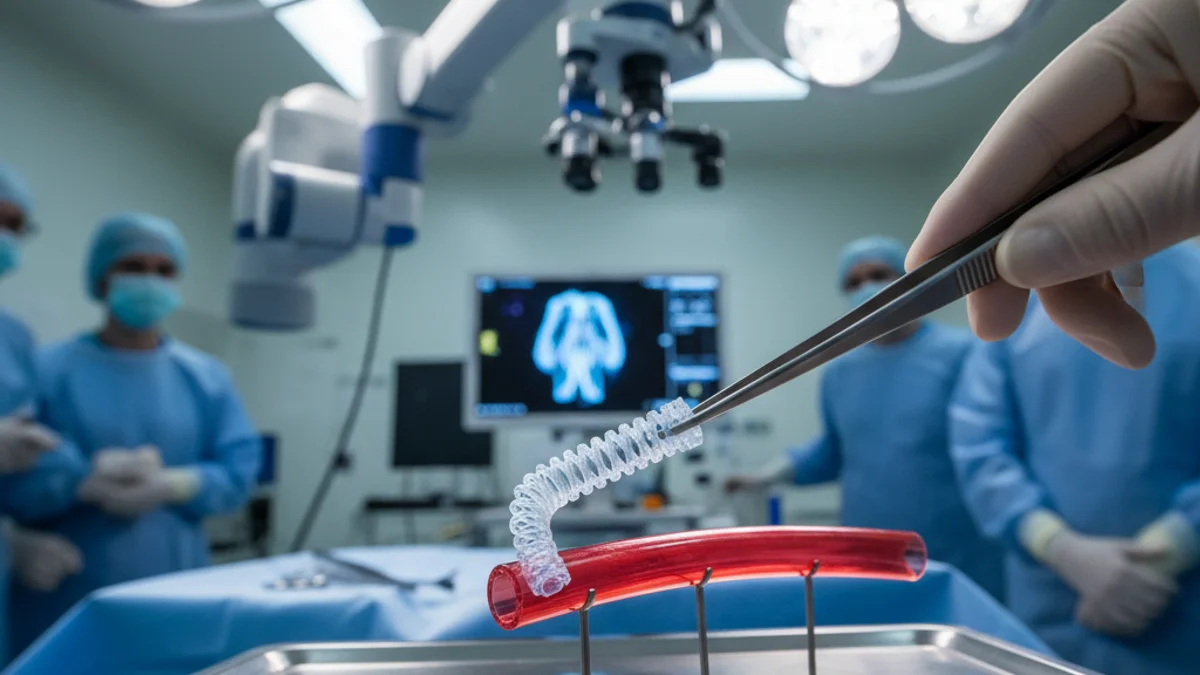
The procedure was performed on a patient suffering from chronic critical ischemia, a serious condition that restricts blood flow and poses a significant risk of amputation. The device works similarly to a stent but is uniquely designed to be absorbed by the body over time.
While keeping the artery open, the implant releases medication to prevent further blockages. This technology is particularly effective for small arteries, which are often difficult to treat using traditional surgical methods, ensuring a more natural recovery process.
The hospital expects to perform around fifteen of these implants throughout 2026. This integration of advanced technology represents a major step forward in treating complex arterial diseases in the region.