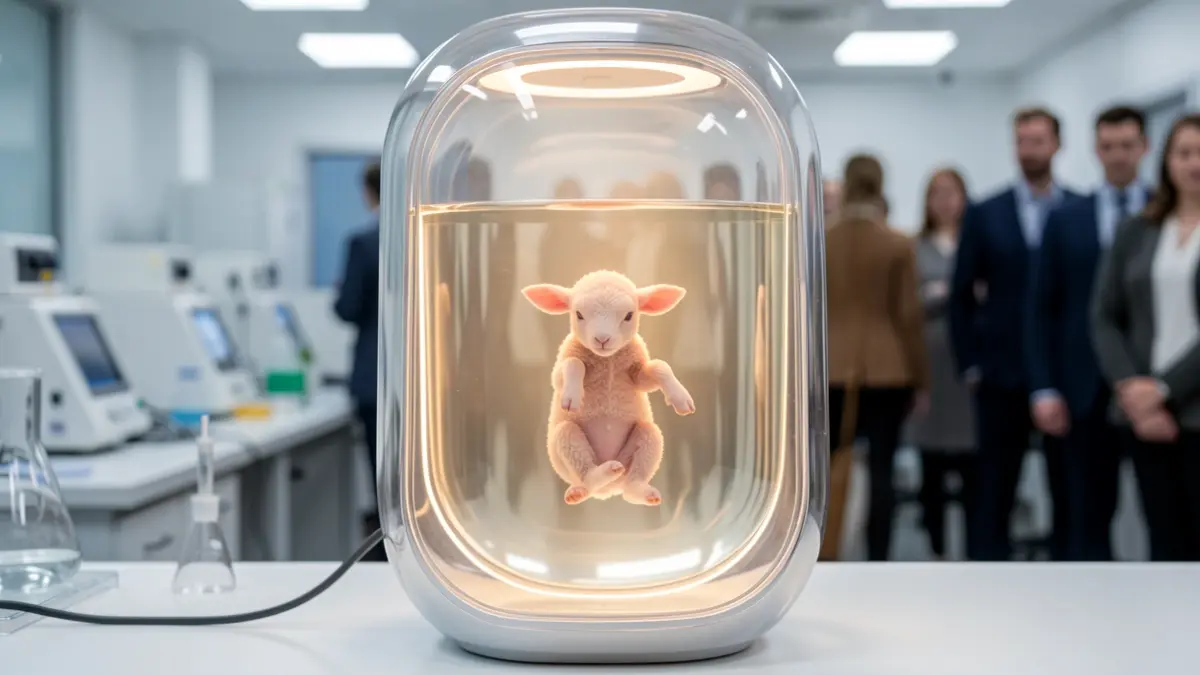
This technology, considered a scientific "milestone," allows the fetus to continue its development outside the mother's uterus in an environment that simulates the placenta. The project, named fetaLife and funded by La Caixa Foundation, has already managed to keep the lamb Gaia, born prematurely, alive for 13 months, with normal neurodevelopment, equivalent to about 15 years in humans.
BCNatal thus becomes the second center in the world, after the Children’s Hospital of Philadelphia (USA), to achieve these advances in creating an artificial placenta. Each additional day of survival at these experimental gestational ages significantly reduces mortality and sequelae.
Dr. Eduard Gratacós, director of BCNatal, explains that the goal is to "trick nature" so that the fetus does not perceive leaving the uterus. He estimates that, with an additional investment of 7 to 8 million euros, the technology could begin to be used in humans within two to three years.
Both the manager of Sant Joan de Déu, Miquel Pons, and the general director of Clínic, Josep Maria Campistol, have highlighted the "groundbreaking" nature of the project, which could change standard treatment protocols for extreme prematurity, the result of many years of dedication.