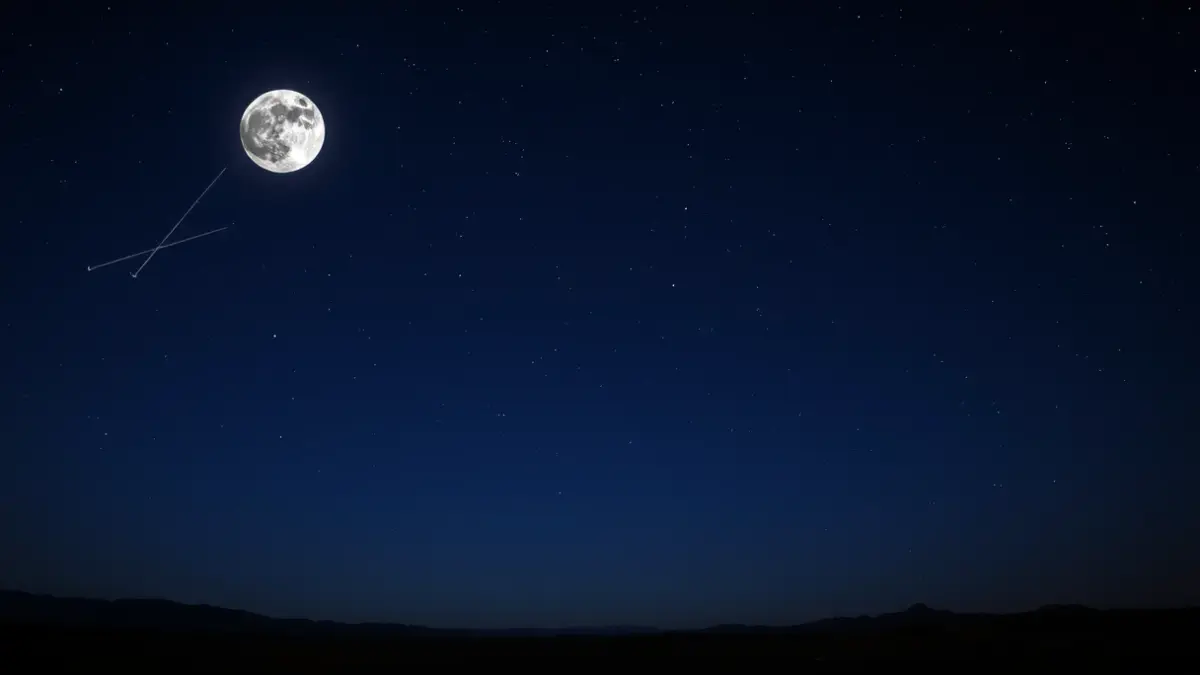
The May sky promises a spectacle for observers, with an astronomical agenda full of events. The first important date will be the full moon, which will reach its peak on May 1st at 7:23 PM. Although its maximum splendor will be during the day, the night will offer a clear and bright view of this phenomenon.
One of the most anticipated moments will be the peak of the Eta Aquariids, a meteor shower that will take place on the night of May 5th to 6th. This phenomenon is linked to the remnants of Halley's Comet, and under optimal conditions, up to 50 shooting stars per hour could be observed. However, the waning moon might reduce its visibility this year.
Later in the month, between May 9th and 16th, the new moon will provide darker skies, ideal conditions for catching the remaining Eta Aquariids, which will remain active until May 28th. This absence of lunar light will favor the observation of fainter meteors.
The month will culminate with a second full moon on May 31st, popularly known as a "blue moon". This name does not refer to a change in color, but rather indicates the presence of two full moons within the same calendar month, a rare occurrence given the duration of the lunar cycle. To fully enjoy these events, it is recommended to move away from light pollution and seek places with a clear view of the sky.