Line L9 of the BRCAT corridor has seen remarkable growth of 168.4% in its first year of service, rising from 45,698 validations in October 2025 to 122,655 this October. This increase occurred despite the doubling of the service frequency to 15 minutes.
The Minister of Territory, Housing and Ecological Transition, Sílvia Paneque, stated that "the data from the first year of operation confirm that the BRCAT corridor has responded to a real mobility need of the citizens. When we offer faster, more reliable, and competitive public transport, user response is immediate".
The entire corridor network is projected to exceed five million journeys this year. Line L9-BRT is expected to reach 1.2 million trips in 2026, surpassing lines L4 and L6-16. Only line L3, with a 10-minute frequency, shows higher demand.
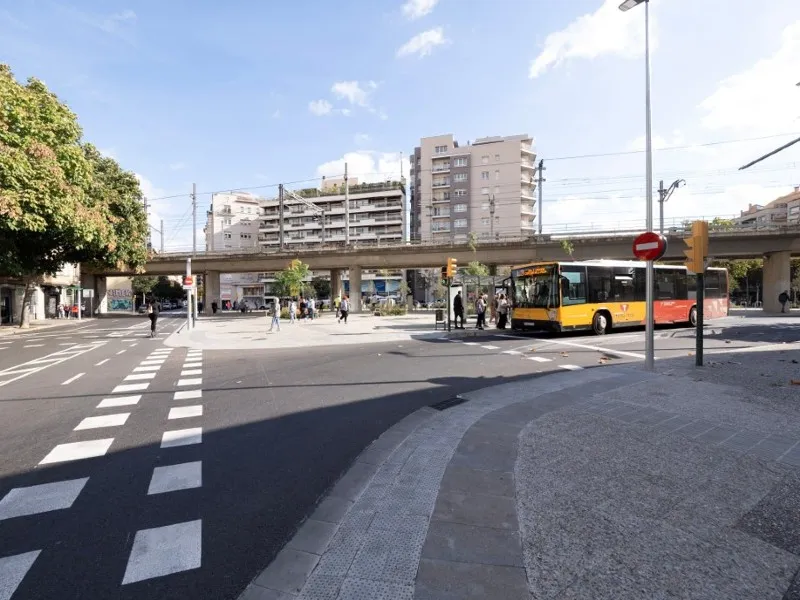
The infrastructure, funded by European funds with an investment of 5.5 million euros, includes 3.5 kilometers of bus lanes, a bidirectional cycle lane, and improvements in accessibility and road safety. Minister Paneque emphasized that the project enhances connectivity, reclaims public space, and contributes to more sustainable cities.
The new infrastructure offers combined frequencies of up to 3.5 minutes in the central section and has reduced travel times by up to six minutes, improving connections to strategic facilities such as the University of Girona and Santa Caterina Hospital.
Environmentally, line L9-BRT already operates with four electric buses, and lines L3 and L4 will soon incorporate one electric vehicle each, reducing pollutant emissions.
The BRCAT Salt-Girona project has been recognized in Europe as a model for sustainable urban mobility, highlighted by POLIS and included as a good practice by the European eBRT2030 project coordinated by UITP.