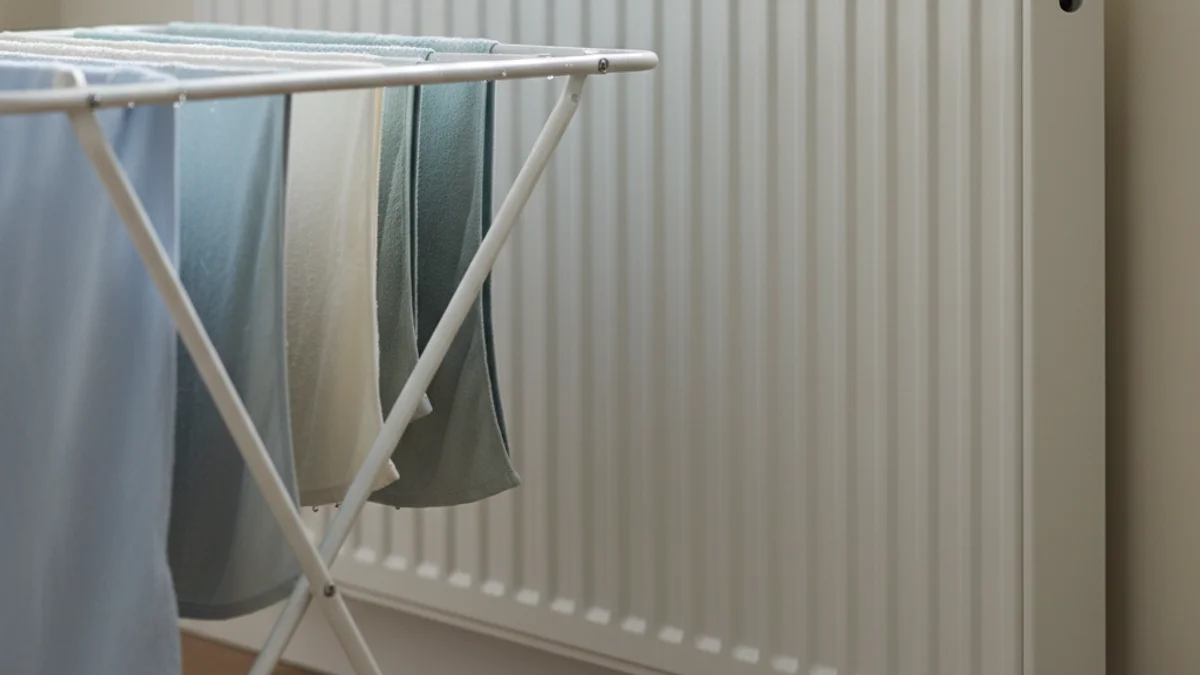
As winter arrives, drying laundry indoors becomes common, often resulting in clothes being placed directly onto radiators. Although seemingly practical, this habit is technically inefficient and contradicts the design principles of heating systems, which rely on convection.
“"Covering radiators destroys the function for which they were designed."
Radiators are designed to allow cold air to enter from below, heat up upon contact with the metal surfaces, and rise, distributing warmth evenly throughout the room. When covered, this airflow is blocked, heat is trapped, and the room takes longer to warm up, forcing the heating system to work harder and longer.
Completely covering a radiator is especially detrimental, as it lowers efficiency without providing any real benefit to thermal comfort. The simplest and most cost-effective solution is to avoid covering them. Alternatives include placing a chair in front of the radiator to hang clothes or using specialized drying racks that keep the garments separated from the heat emitter.