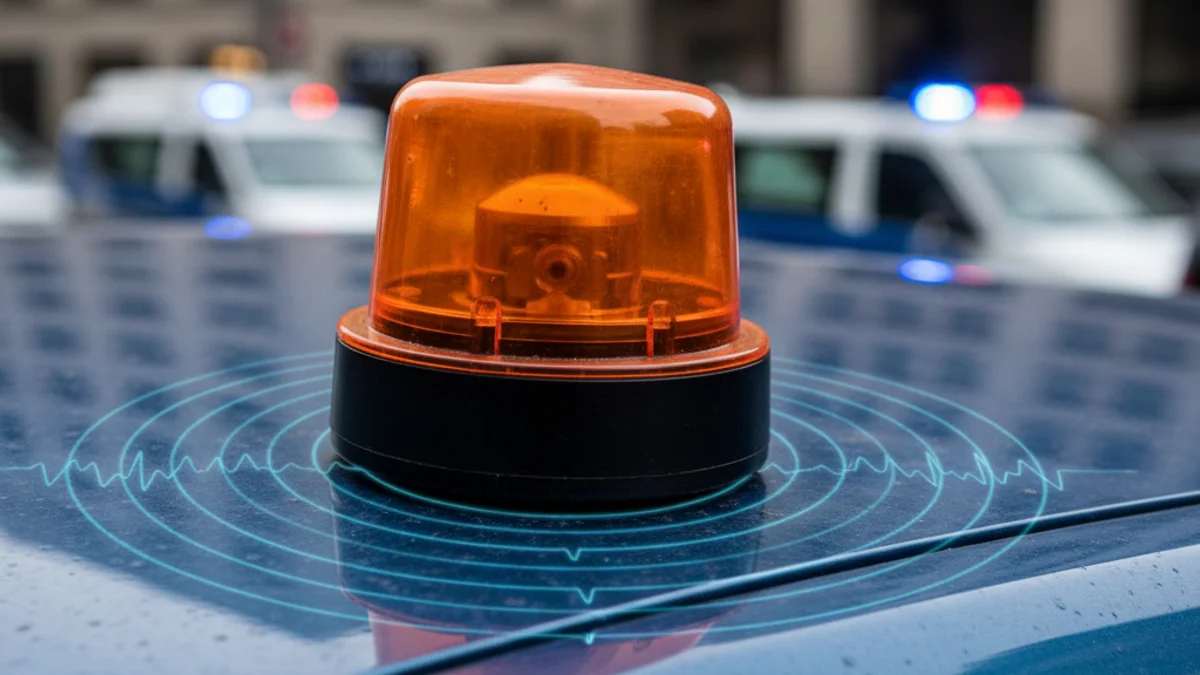
The V16 beacon, designed to replace safety triangles, has generated several controversies since its implementation. Now, the focus shifts to cardiovascular health, as cardiologist José Abellán, known online as @doctorabellan, has issued a crucial warning regarding its use.
“"In Spain, we estimate that more than 300,000 people live with a pacemaker and around 60,000 with an implantable defibrillator. These are devices that maintain the heart rhythm and, often, save lives."
According to the specialist, the risk lies not in the antenna or the geolocation system of the beacon, but in the powerful magnet that the models incorporate to fix them to the vehicle's roof. This magnetic field can be detected by implanted cardiac devices, causing them to enter what is known as 'magnetic mode'.
When a pacemaker or defibrillator detects a powerful magnet, it temporarily reconfigures and becomes 'deaf' to the heart's natural electrical activity while the magnetic field is present. This is especially dangerous if the beacon is placed directly over the chest in a stressful situation.
“"The device is not damaged or broken, but it 'reconfigures' while the magnet is on top."
Although Dr. Abellán assures that the risk is low and comparable to that of other everyday devices like a microwave, he has offered two key recommendations: always keep the beacon more than 20 to 30 centimeters away from the chest and handle it with the arm opposite to the side where the device is implanted.