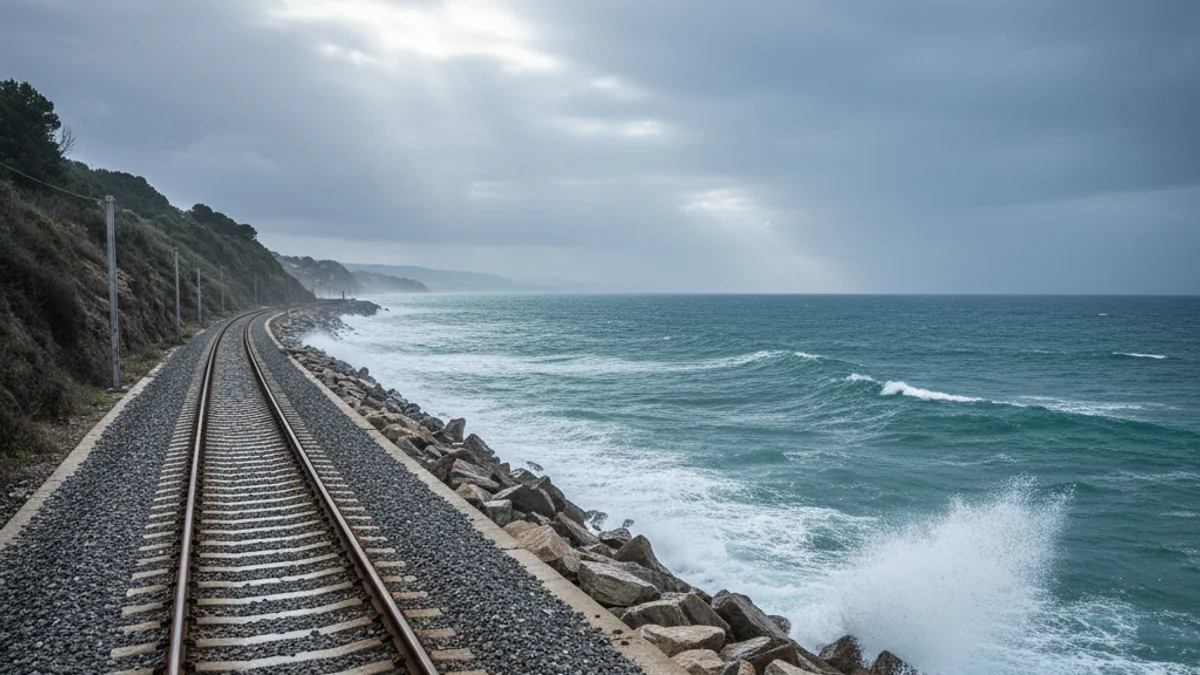
The vulnerability of the rail network to eastern storms and the sea-level rise, estimated at 40 centimeters over a century, has reopened the dilemma of maintaining the current coastal route. Experts recall that elevating the tracks was already discarded forty years ago by the Mataró City Council due to technical difficulties and visual impact.
In the short term, the focus remains on maintaining the current line using high breakwaters. A successful example is the section between Riera de Argentona and the Mataró port, where the stone protection has proven effective during recent severe weather events.
Looking ahead, more ambitious alternatives are being considered, such as moving the infrastructure inland. One option involves utilizing the C-32 highway corridor, an existing infrastructure since 1968, which could accommodate the new railway path to avoid coastal erosion.