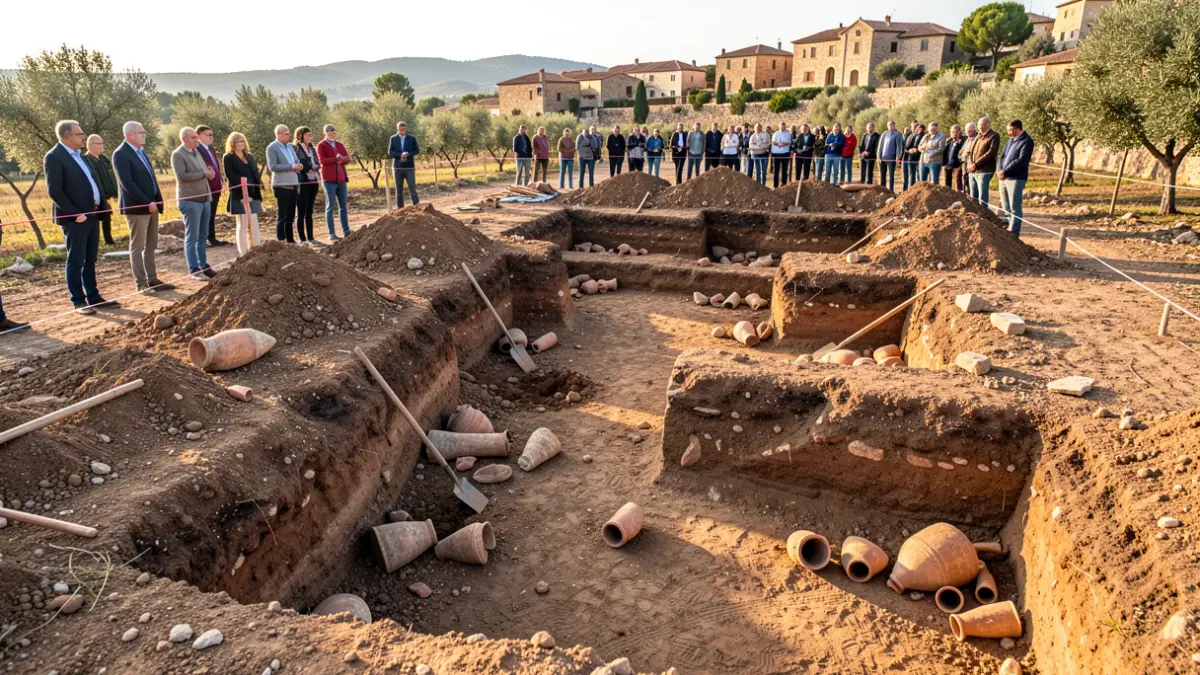
The campaign, running from August 16th to 27th, focuses on excavating area 25, corresponding to the temple, and advancing in area 20, both with religious significance. According to David Garcia, the lead archaeologist, Sant Jaume features a temple and religious spaces forming a sanctuary within a commercial hub.
This year, a new plaza is being opened, which may have served as a distribution point for the surrounding religious areas. The discoveries, including a large quantity of Phoenician pottery, reinforce the hypothesis that Sant Jaume could be the northernmost Phoenician trading post in the Iberian Peninsula. Garcia notes that Phoenician trade is always linked to religion, and this settlement might have been a small peripheral commercial embassy within their world, similar to others found in Portugal and Africa.
In addition to the plaza, two new areas will be excavated: area 18, the last major building yet to be explored, and area 22, in the southern part, the most unknown section of the site. The team is hopeful that excavating this southern area, facing the sea, will shed light on the mystery of the living quarters for its approximately ten inhabitants. So far, warehouses, stables, kilns, sewage systems, and imposing towers have been found, but not sleeping areas.
Another enigma that has emerged is a bricked-up doorway in area 18, dating from after the final fire that destroyed the settlement. The fire, according to evidence, was deliberately set, as indicated by the large amount of ash uncovered.
The working team consists of 14 people, including the direction of Carme Saorin and Marta Mateu alongside David Garcia, a junior researcher, Pol Sancho, and volunteer students from the universities of Barcelona, Tenerife, Albacete, and Madrid. An open day will be held on Sunday, August 23rd, allowing interested individuals to visit the site.