The Research Group on Protohistoric Archaeology of the University of Barcelona (GRAP-UB) has completed the 6th excavation campaign at the La Cogula settlement in Ulldecona. The work focused on studying four areas, two of which are new and could correspond to dwellings, while the other two, previously excavated, appear to be smaller buildings intended for storage.
Campaign director David Garcia Rubert highlighted that the settlement is "significantly larger than we thought and its urbanism is also more complex." So far, 21 areas have been discovered around four streets, with a surface area exceeding 700 square meters. The site is well-preserved, with only 10% affected by modern constructions.
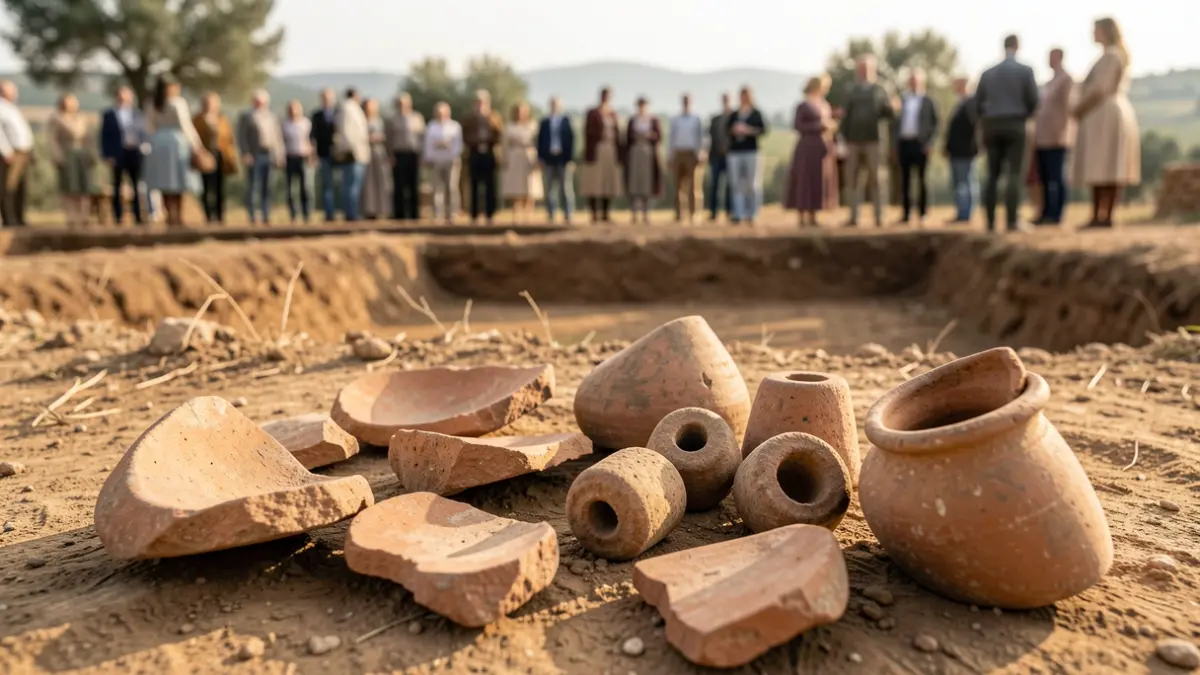
One of the most relevant findings this year includes five loom weights, similar to those found at the nearby settlement of Sant Jaume (Alcanar). According to Garcia, the presence of these weights, necessary for setting up a loom, "indicates the intense relationship that existed with the Phoenicians," as the textiles produced at the Sant Jaume Complex (which includes sites in Alcanar and Ulldecona) were traded by Phoenician merchants. Future campaigns will need to determine if La Cogula was solely for storing weights or also for manufacturing textiles.
Excavations will continue next year, focusing on sector 7, dating from the late Bronze Age (1200 BC - 700 BC), a period preceding the Iron Age (7th-6th century BC). During this initial phase of occupation, seasonal huts for transhumant shepherds from Aragon are believed to have been established.
The work team comprised eight students from the University of Barcelona and four GRAP members. Due to high temperatures, the campaign was adapted, with workdays ending at 1 p.m.
GRAP has expressed gratitude for the economic and logistical support from the Ulldecona City Council, considering it essential for the consistent annual results.
At the end of the month, GRAP will commence the 28th campaign at the Sant Jaume-Mas d’en Serrà site in Alcanar, running from July 28 to August 10 and August 15 to 30. As every year, an open day will be held to present the campaign's findings.