On April 27, the archaeologists responsible for the intervention shared with the residents of Garcia the results of a research project that, although it did not achieve its initial objective, has uncovered valuable funerary heritage.
The main goal of the excavation was to locate the remains of the ancient Romanesque temple from the 13th-14th centuries, whose presence is widely documented in historical sources. However, the fieldwork has not been able to find any architectural vestiges of this structure, suggesting that later constructions or terrain transformations might have permanently removed or covered its foundations.
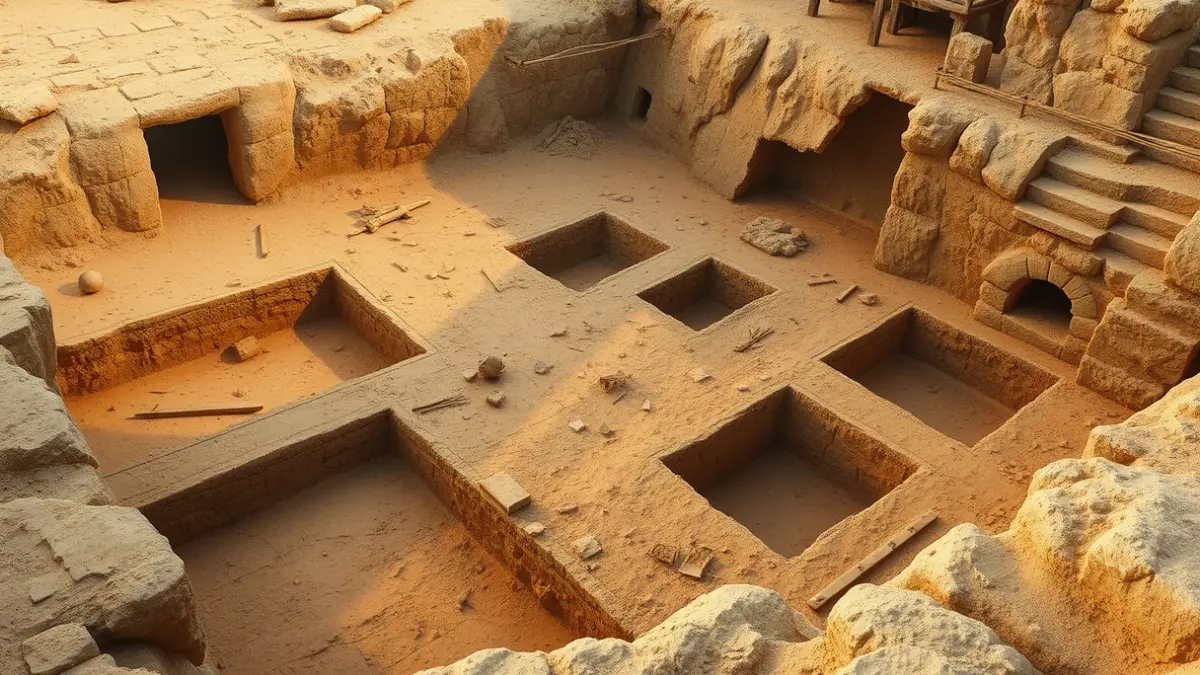
The surprise came from beneath the building, where 14 burials were confirmed. These are divided into two types: individual graves, excavated following the rituals of the era, and funerary vessels, spaces intended to receive remains in a more compact format. All human remains have been removed for laboratory analysis, where their age, sex, and possible pathologies of Garcia's ancient inhabitants will be determined.
In addition to the skeletal remains, the excavation has allowed for the recovery of various objects that were part of the funerary trousseau. Among the most notable pieces are rosaries, coins, and two small glass cruets, which add great value to the archaeological collection.
The research will now continue in the laboratory, where the detailed study of the materials and human remains will allow for a new chapter to be written about the past of the Old Church and the population of Garcia.