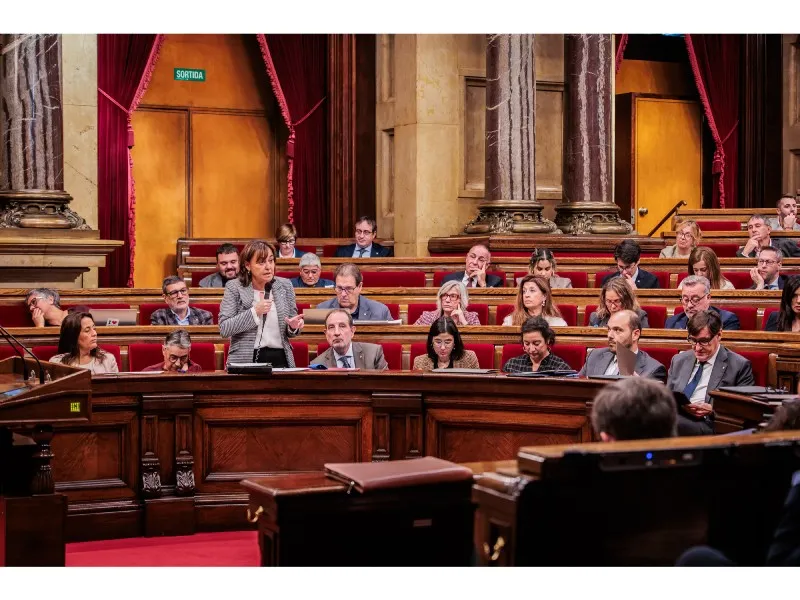
The Minister of Territory, Housing, and Ecological Transition, Paneque, appeared before the Parliament to detail the actions taken in the first month since the law came into effect on October 3rd. She announced that in November, funding for asbestos removal grants will be increased, with an allocation of 20 million euros for removal, transport, and waste treatment.
These grants complement those for emergencies, which have already facilitated interventions in municipalities within Ripollès, Garrotxa, and Alt Urgell. A new call for proposals will also address roofs damaged by recent weather events.
According to data from the Catalan Institute of Cartography and Geology (ICGC), 122,460 asbestos cement roofs have been identified, covering approximately forty square kilometers and an estimated 700,000 tons of material across 945 municipalities. The Generalitat estimates that nearly a million tons of asbestos cement still need to be removed, with over 85% exceeding its useful life by 2030.
Key operational developments include the creation of the Office for Asbestos Eradication, with an initial staff of 13 people, and the mandatory issuance of an asbestos certificate for property transactions. Public consultation for the law's future regulations will also commence, and the asbestos cement roof map will be updated.
The law is structured around five pillars: knowledge (Catalan Census of Asbestos Materials), responsibility (removal from public heritage by 2028), instruments (Asbestos Eradication Fund, authorized company registry, and sanctioning regime), people (enhanced protection against related diseases), and governance (institutional coordination).